MINISTRY OF EDUCATION
Primary Math and Reading (PRIMR) Initiative
The agricultural development initiative in Kenya began in 2013 as part of the Primary Math and Reading (PRIMR) Initiative, a program supported by USAID.
2013 · 154 pages
Sign in to readA free account is required to download.
Abstract
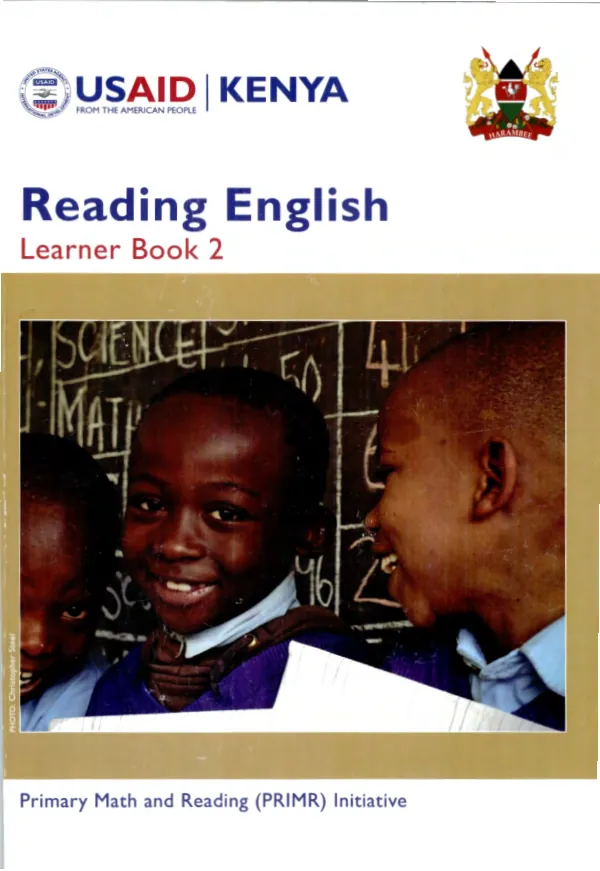
The initiative aimed to improve reading and math skills among primary school students. The program involved the development of a reading book, which included a series of lessons and activities designed to enhance students' reading and comprehension skills. The reading book, titled "Reading English Learner Book 2," was developed in collaboration with the Ministry of Education and other stakeholders. The book was designed to cater to the needs of students in grades 1-2, with a focus on developing their reading skills in English. The book included a range of activities, such as word recognition, vocabulary building, and comprehension exercises. The initiative also involved the development of a scope and sequence, which outlined the reading and math skills that students were expected to acquire at each grade level. The scope and sequence was created in conjunction with the Ministry of Education and other stakeholders, and it served as a guide for teachers in planning and delivering reading and math lessons. The program also included a series of assessments and evaluations to assess the progress of students and teachers. The assessments were designed to provide feedback on the effectiveness of the program and to identify areas for improvement. The program also included a component for teacher training, which aimed to equip teachers with the skills and knowledge needed to deliver effective reading and math lessons. The initiative was led by a team of experts, including Dr. Sylvia Linan-Thompson, who led the creation of the Kiswahili and English scope and sequence. The team also included Dr. Agatha van Ginkel, Dr. Hellen Inyega, Dr. Angelina Kiyo, and Jody Roy, who provided technical support to the program. The program also received support from the Kenya Education Staff Institute and the Teachers' Service Commission. The program's success was attributed to the tireless efforts of the team, including experts, teachers, and pupils. The program's impact was evident in the improved reading and math skills of students, as well as the increased confidence and motivation of teachers. The program's effectiveness was also demonstrated through the positive feedback from teachers and pupils, who appreciated the support and resources provided by the program. The program's focus on developing reading and math skills among primary school students was a key factor in its success. The program's emphasis on teacher training and support also contributed to its effectiveness. The program's scope and sequence provided a clear framework for teachers to plan and deliver reading and math lessons, which helped to ensure consistency and quality in the program. The program's impact extended beyond the classroom, as it also contributed to the development of a more effective and efficient education system. The program's success was a testament to the power of collaboration and partnership between government, civil society, and the private sector. The program's legacy continued to inspire and motivate future generations of students, teachers, and policymakers.