USAID. MISSION TO SENEGAL
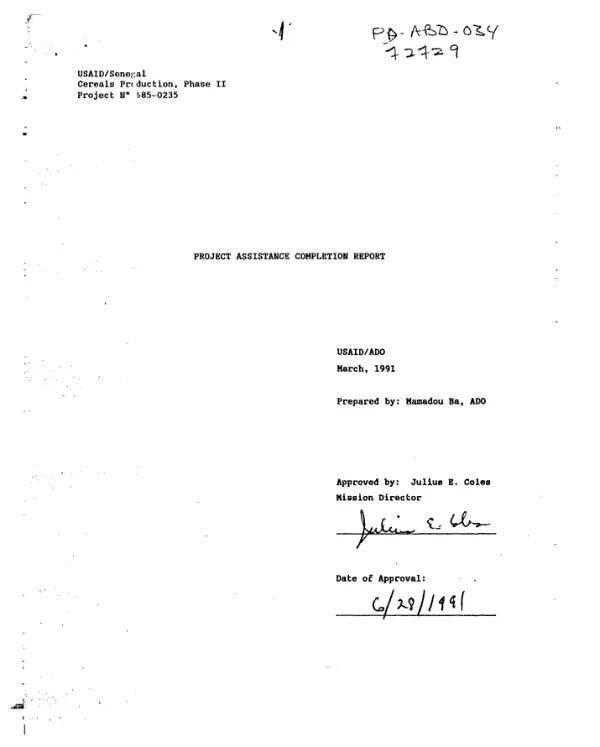
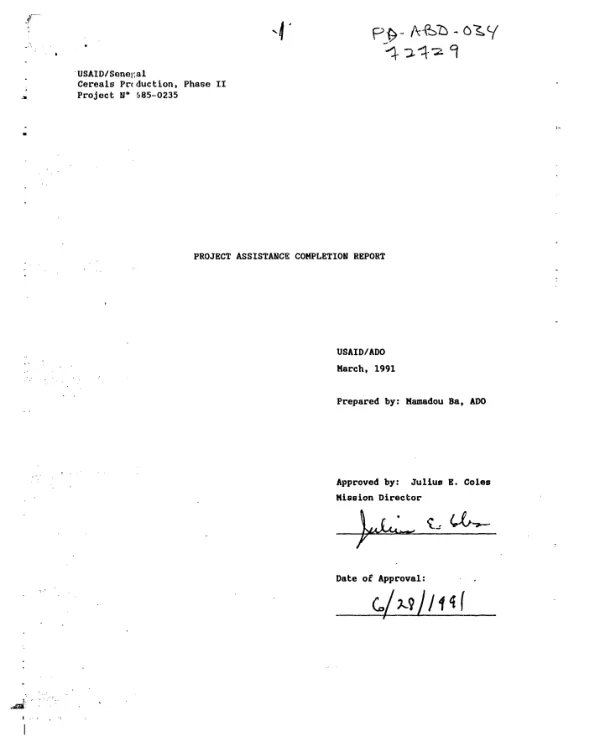
Project assistance completion report : cereals production, phase II
PACR of a project (1979-1990) to improve the agricultural research and extension activities of the Government of Senegal (GOS) in the Groundnut Basin.
1991
Sign in to readA free account is required to download.
Abstract
The primary implementing agency was the Societe de Developpement et de Vulgarisation Agricole (SODEVA). The project encountered many problems. Between project design and the beginning of implementation, the entire policy and institutional context within which SODEVA operated changed radically. (1) The supply system for the factors of production and the agricultural product purchasing organization virtually disappeared. (2) Short-term credit for inputs was canceled. (3) Cooperatives came under severe scrutiny and were generally discredited. Consequently, the production targets were not achievable, since farmers were simultaneously encountered with declining rainfall and the lack of availability of improved seed, fertilizer, and credit. SODEVA's budget submissions were late for a variety of reasons and the initial disbursement system of advance payments was stopped after a very negative audit report. SODEVA was then required to pre-finance a considerable proportion of project expenses and since the GOS did not cover counterpart costs in a timely manner, SODEVA had to borrow on the commercial market to continue its operations. In 1984, the project was redesigned to put more emphasis on agroforestry and soil conservation. During this phase, the main problem was that there were too many agencies involved. This meant that decisions couldn't be made easily and field work suffered. The project also experienced numerous staff changes, which compounded problems between headquarters and the field. Despite these problems, the project made some significant accomplishments. A new agroforestry system was established in 63 villages, which involved the creation of village nurseries to produce seedlings for woodlots and windbreaks. Ten new wells were constructed and nine rehabilitated. Training in agroforestry was provided to 46 GOS agents. A documentation center was established and is fully operational. Several lessons were learned. (1) To overcome the Groundnut Basin's environmental problems, emphasis is required on agroforestry, soil and water conservation, village-level woodlots and windbreaks, and the integration of livestock into the production system. (2) When research is worthwhile, an efficient mechanism needs to be used to disseminate this research. (3) Women are an important labor source in the Groundnut Basin, and progress could be furthered by providing them with literacy instruction training as well as new technologies for gardening. food preparation, livestock care, etc.