USAID. MISSION TO COSTA RICA
Project assistance completion report : cooperative development services
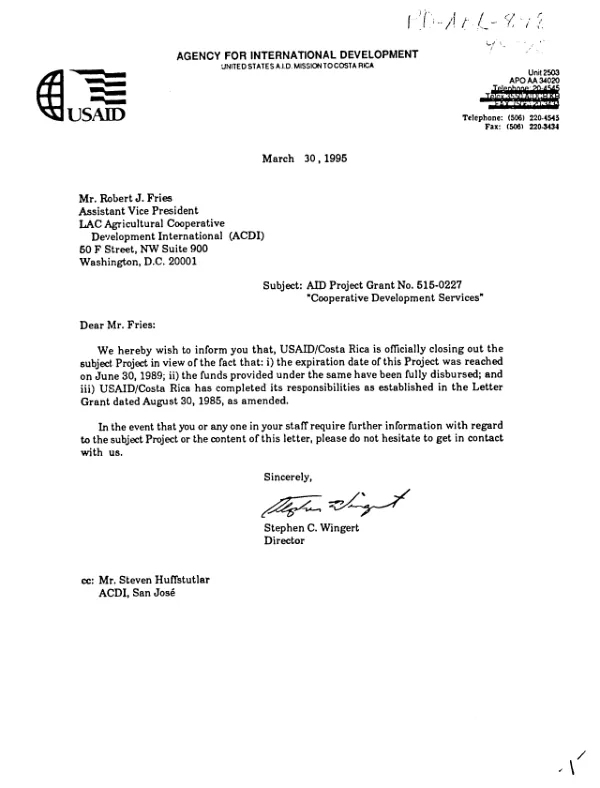
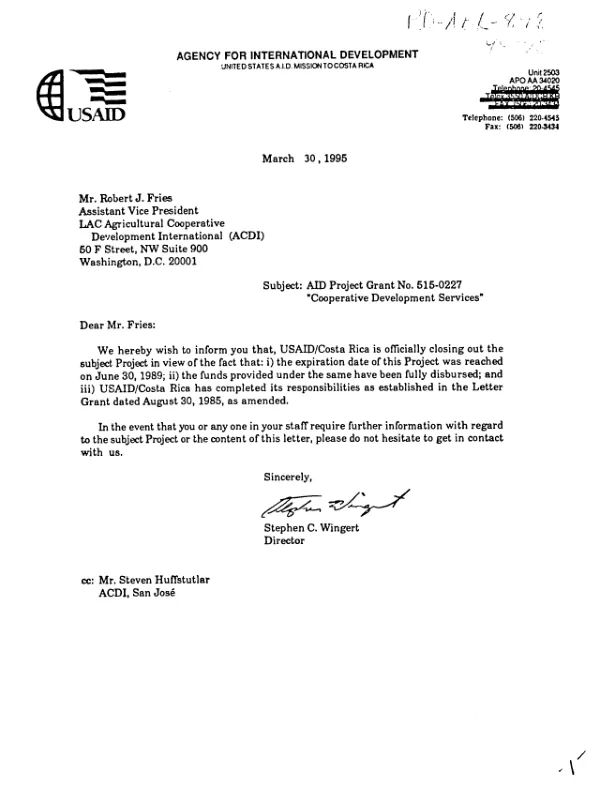
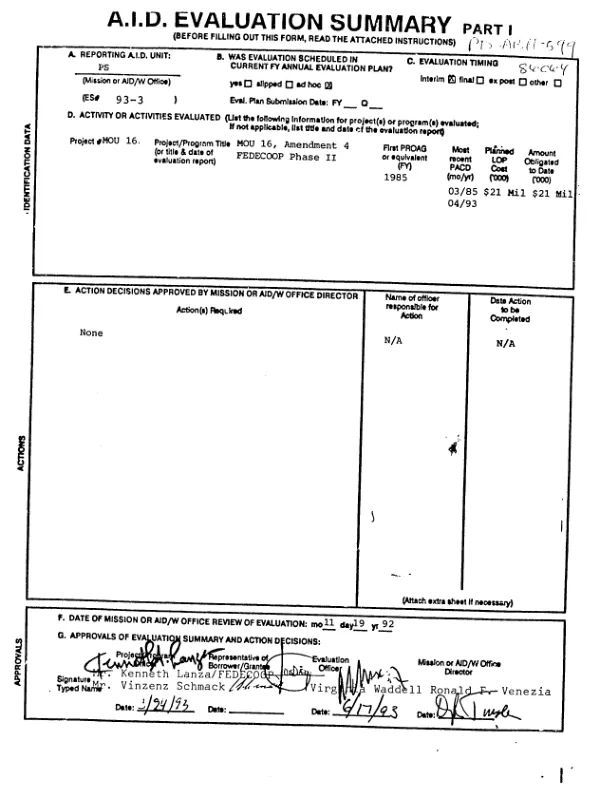
PACR of a grant (8/85-6/89) to Agricultural Cooperative Development International (ACDI) to provide cooperative development services to selected coffee and oil palm cooperatives in Costa Rica.
1995
Sign in to readA free account is required to download.
Abstract
The project was successful in providing support to the Costa Rican economy as well as services to cooperatives and their farmer members. The coffee component involved a $20 million USAID loan fund, the entire amount of which was placed with 7,111 small farmers belonging to the national coffee federation, FEDECOOP, which administered the loan fund and provided TA to farmers; on average, just under one ha of coffee was replanted per beneficiary farmer. The project helped the farmers to use new growing methods which helped to prevent the spread of coffee rust disease, which had threatened the Costa Rican coffee industry. The project also made loans for diversification into new export products to help farmers avoid the problems of one-crop dependency, making 521 loans to finance 1,287 ha of new plantings of macadamia (72% of area planted), cacao, cardamon, avocado, and soursop. Additionally, membership in FEDECOOP grew from 30,000 to over 44,000 farmers and FEDECOOP"s sales increased to over $100 million annually, although 4 of the 33 local cooperatives comprising FEDECOOP went broke; no provision was made in the grant for helping local cooperatives. In the second component, Coopecalifornia, an oil palm cooperative, was organized among former workers from oil palm plantations of the Chiquita Brands company in the Quepos area. The cooperative purchased 1,700 ha of land from Chiquita, which provided a long-term, low-interest loan. USAID loan funds were used for replanting supplies, roads, and machinery, while ACDI trained the former plantation workers to become farmers. The cooperative took more than the expected 4-5 years to break even, but finally exceeded its loan repayment schedule by year 8, developing substantial financial reserves, which it is now using to buy adjoining land and build houses for its expanding membership base. Coopecalifornia is now one of the most successful worker cooperatives in Latin America. Thanks to substantial new plantings of oil palm in the Coto/Golfito area by cooperatives which, though not funded by USAID, are copying Coopecalifornia"s success, Costa Rica became self-sufficient in oil palm in 1990, and now exports on the world market. The monopoly in oil palm enjoyed by Chiquita in 1984 has also been broken, with about 50% of national oil palm production now in the hands of Costa Rican farmers and their cooperatives. In retrospect, the design of the coffee credit activity did not anticipate two kinds of emergencies which unfolded in subsequent years: the need to modernize FEDECOOP"s administration and marketing methods; and the collapse of the international coffee cartel. As a result, FEDECOOP has suffered reversals and is now reorganizing as a much leaner organization. It did not help that FEDECOOP played the role of banker and guarantor of the loan trust fund. Nevertheless, the major problems faced by FEDECOOP were not caused by the project, and FEDECOOP would have been worse off without it.
![Project of cooperative administration strenghtening [i.e. strengthening], OPG-515-[0]248 : mid-term evaluation](https://covers.devme.ai/gen/33171.webp)