USAID. MISSION TO JAMAICA
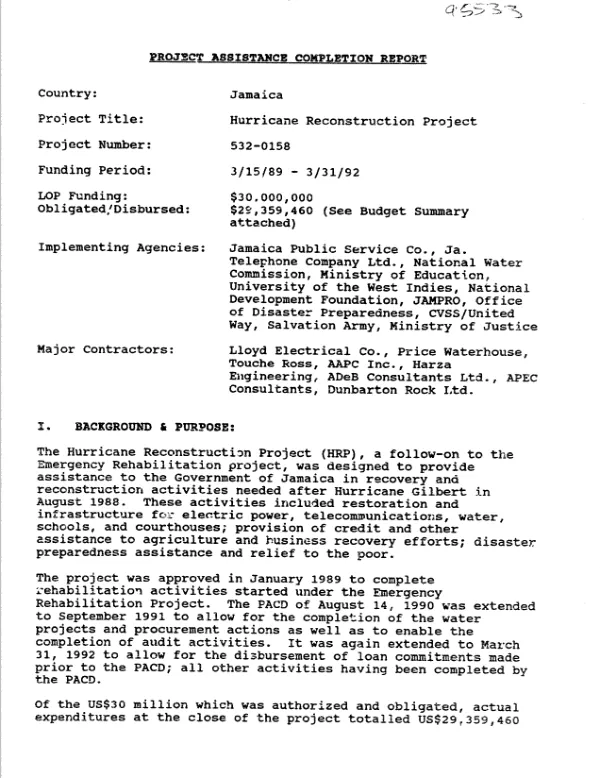
Project assistance completion report : emergency rehabilitation project (532-0185)
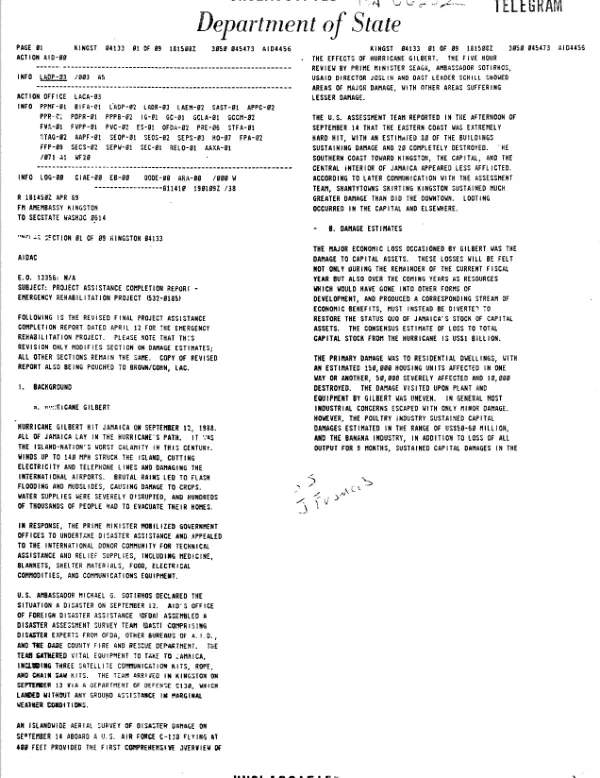
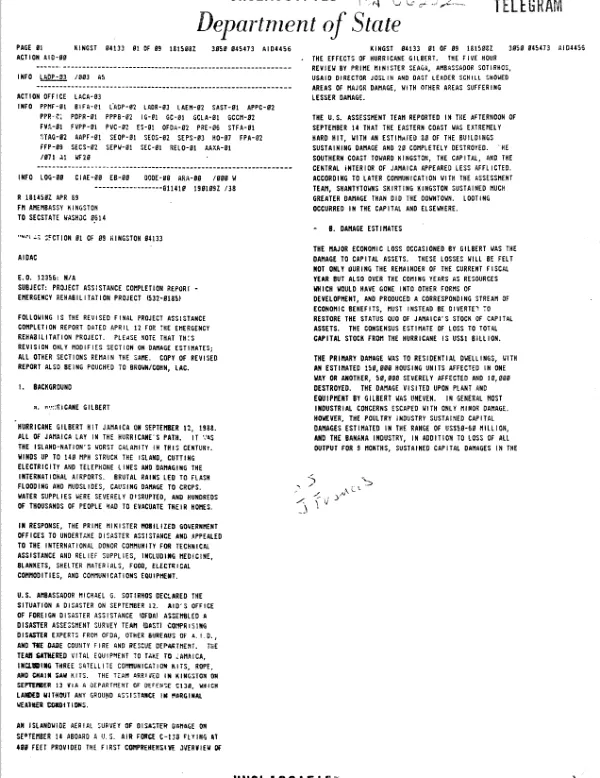
PACR of a project (9/26/88-2/25/89), part of a multi-donor effort, to provide emergency rehabilitation assistance to the Government of Jamaica in response to destruction caused on 9/12/88 by Hurricane Gilbert.
1989
Sign in to readA free account is required to download.
Abstract
The project was clearly focused and made a major and speedy impact on the recovery process. It also proved to be an educational experience for the project managers who participated in the entire range of project activities from design through implementation in a 6-month period. In the power sector, A.I.D. financed personnel and equipment to help restore damaged transmission and distribution lines on one-third of the island -- including 98% of all service in Kingston, St. Andrew, and St. Thomas parishes -- within 80 days of the hurricane. In the shelter sector, the project financed 806 prefabricated housing units for needy and homeless families, as well as materials needed to reroof 20% of the 213,000 damaged homes. It also provided posters and booklets demonstrating hurricane-resistant construction methods. The project supplied 80% of pipes, fittings, pumps, and vehicles necessary for restoring potable water and sewage disposal services. Equipment was also provided for testing and monitoring water quality. In the telecommunications sector, the project financed equipment needed to speed restoration of service. More limited assistance was provided ino the health and agriculture sectors and for removal of bottlenecked relief goods from Kingston port. Grants were also provided to three NGO's -- the National Development Foundation to provide loans to small and micro businesses, the Kingston Restoration Project to provide relief services to residents of downtown Kingston, and CVSS/United Way of Jamaica for subgrants to other PVO's for relief activities. The project successfully taught several lessons. (1) An early initial deadline should be set for project completion (within 150 days) should be set in projects of this kind. (2) Assigning components to different Mission offices permits deployment of a large volume of person-hours while providing the best available expertise related to each component. (3) A concurrent audit is desirable in a high visibility crisis situation. (4) It is worthwhile to tailor a management information system to project management needs rather than relying solely on reports intended for other purposes. The project also successfully showed the importance of acting early to develop an effective procurement system, although this aspect of the project could have been improved by selecting procurement specialists before signing the Pro-Ag and by increased use of local importers.
Related documents
Documents in this collection
 1989
1989USAID DEC
Project assistance completion report : emergency rehabilitation project (532-0185)
Open record 2002
2002USAID DEC