USAID. MISSION TO ZAIRE
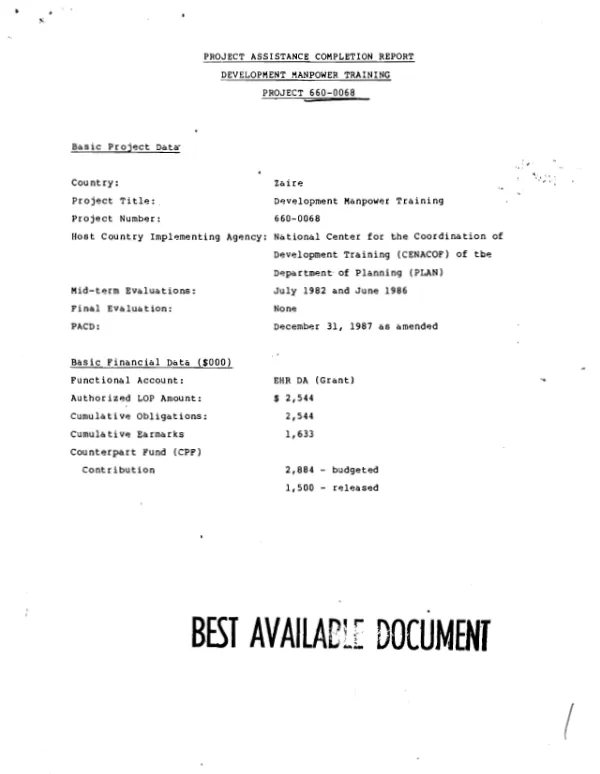
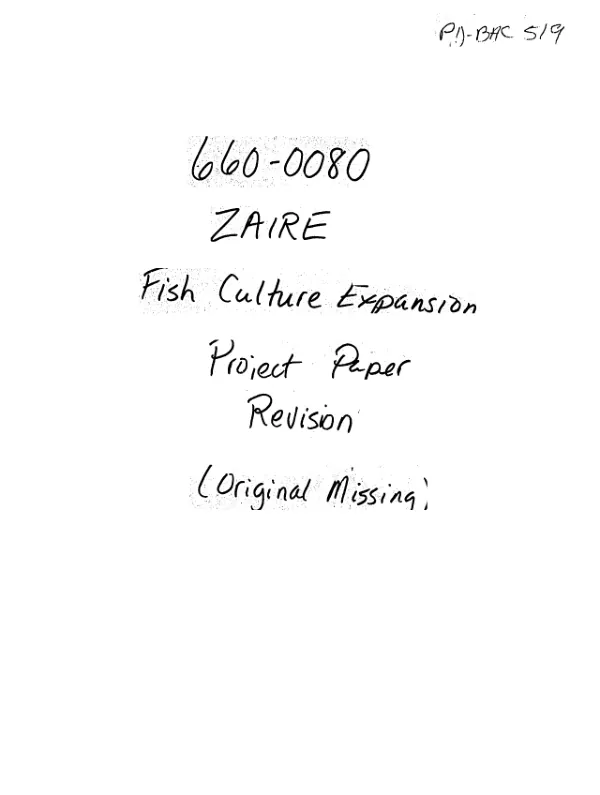
Project assistance completion report : fish culture expansion project
PACR of a multi-donor project (1978-88) to develop and institutionalize fish culture extension services for small farmers in Zaire.
1988
Sign in to readA free account is required to download.
Abstract
USAID/Z was primarily involved with funding TA and commodities, as well as arranging participant training in the United States and other countries. The project was highly successful. More than 8,000 farmers have participated, and average fish production has increased from less than 15 kgs to more than 30 kgs per 100 sq. meters. Most importantly, the project achieved its main objective when the Government of Zaire (GOZ) established a National Program for Family Fish Culture to replace the project in 8/88. Although this does not guarantee continued success, it does exhibit GOZ commitment to the project. The Peace Corps will continue to provide extension services for the next 6 years and USAID/Z will continue local currency support for equipment and training. The project established management/leadership training centers for farmers in the following regions: Bas Zaire, Bandundu, Kasai Oriental, Kasai Occidental, and Kivu. Originally, the centers were used solely for fingerling production, while training was to be conducted at only one site in central Zaire. When this site proved inaccessible, training programs were incorporated into the centers. Courses are conducted year-round for 20 farmers at a time. USAID/Z completed all procurement, including vehicles and office and technical equipment. TA consisted of: (1) a consultant to the GOZ counterpart organization, Project Pisciculture Familiale; (2) two mobile extension team leaders; and (3) advisors to develop flip charts. Although participant training was not a major component, two persons completed U.S. management training programs and several others were sent to Israel and the Ivory Coast to study fish pond production. Another major accomplishment was the organization of farmer groups, which was not foreseen in the project documents. These groups meet every 3 months and require no dues or official registration. In addition to providing a forum for information exchange, the groups have maintained member interest in fish farming and have attracted new farmers. The project succeeded because it made fish farmers totally responsible for their own involvement and success. Participants did not receive any TA until they had dug their own ponds without any project resources or assistance. A second reason for the project's success was its simplicity. Only TA was provided to farmers - no loans, no machines, no involved marketing schemes. If project designers can picture themselves in the role of implementors, they may be able to design projects which are more simply and easily implemented.
Related documents