SALVADORAN FEDERATION OF BAR ASSOCIATIONS
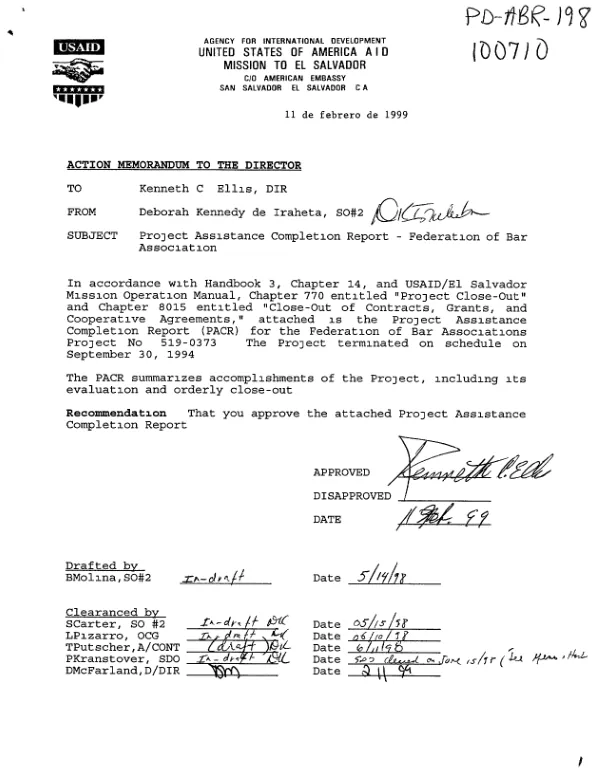
Project assistance completion report (PACR) : Federation of Bar Associations
PACR of a project (9/90-9/94) to: strengthen the capacity of the Salvadoran Federation of Bar Associations (SFBA) to take a more active role as a professional, independent monitor of the judiciary; and provide legal education and establish professional standards for legal practitioners.
1999
Sign in to readA free account is required to download.
Abstract
The project was implemented by the Inter-American Bar Foundation. The SFBA has substantially increased its presence in Salvadoran society and the services offered to associates and the legal community in general. Official institutions such as the Ministry of Justice and the Institute for Liberty and Progress have used the SFBA as the dissemination channel for important government programs. Private institutions have also begun requesting SFBA cooperation in the organization of seminars on critical issues. The SFBA is, for the first time in its history, offering its associates access to up-to-date reference materials, including special printing of new legislation. A library open to all the legal community is now functioning at SFBA headquarters. While in the past, meetings or seminars were generally held in judicial facilities, today the SFBA headquarters is considered the ideal place for these events. The SFBA has continued to expand its services to, and thus presence in, the wider community through its law-related education program and legal clinic. The former provides information (through television and radio programs) on the law in response to real-life problems described in viewers' letters, using the volunteer services of several prestigious lawyers. The write-in clinic delivers a similar service through a local newspaper. Additionally, the program has distributed wallet-size cards that enumerate individuals' rights. In 1994 the SFBA stepped up its efforts to introduce a constitutional amendment to make membership in a national bar obligatory for all lawyers in the association rather than just those on the Supreme Court. The SFBA also became active in sponsoring discussions on other proposed constitutional amendments aimed at increasing judicial independence. Finally, the SFBA conducts elections among its members to elect representatives to the National Council of the Judiciary and to present a slate of Supreme Court candidates to the General Assembly that selects these magistrates. Nonetheless, despite some advances, the SFBA has not overcome the institutional weaknesses required to transform itself into a self-sustaining organization that can take an independent role in promoting legal reform and public service, as well as in representing professional interests. The project has provided information to the SFBA and other members of the legal community on how such goals have been reached by bars in other countries, but to date has not been able to generate the momentum either within or outside of the SFBA to carry such actions forward. While the project has undeniably reinforced the image and activities of the SFBA, most observers (and the project's evaluators) concur that the further transition to a self-sustaining, independent institution with an active role in development of the legal sector may require much more time, or in the end be achieved only by a different organization. The latter seems most likely, since most versions of the proposed constitutional amendment dealing with a compulsory bar now no longer mention the Federation, but "some such entity". (Author abstract, modified)