USAID. MISSION TO DOMINICAN REPUBLIC
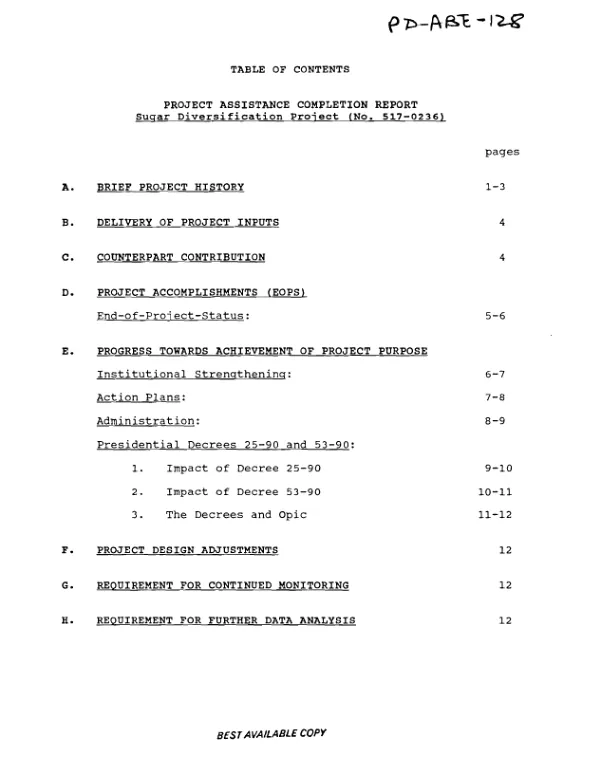
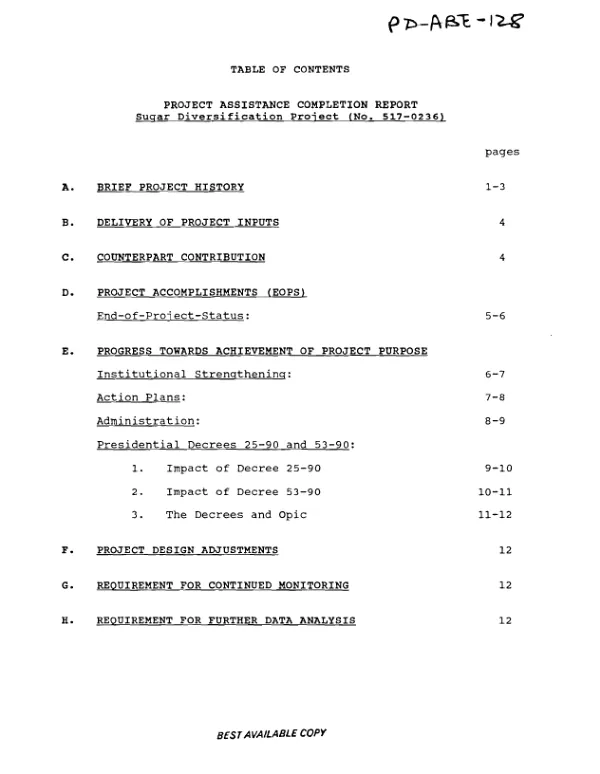
Project assistance completion report : sugar diversification project (no. 517-0236)
PACR of a project (1987-1992) to assist the Dominican Republic's State Sugar Council (CEA) in planning and implementing a sugar diversification program.
1992
Sign in to readA free account is required to download.
Abstract
The CEA's Agro-Industrial Operations Division (DACEA) implemented the project. The project faced enormous problems from the beginning and was constrained by a lack of cooperation from the Government of the Dominican Republic (GODR). First of all, it was delayed more than two and a half years because DACEA did not meet conditions related to financial management and controls. TA was also delayed, with the senior resident advisor arriving about 16 months after the project start-up. Then, two Presidential decrees were issued which significantly undercut project goals. The first called for the expropriation of certain lands that had been leased by CEA to private investors. These lands were then divided up and turned over the campesinos. The second decree called for a review to determine appropriate compensation for the private leaseholders. To date, however, most leaseholders have received no compensation. In light of the GODR's lack of commitment to privatization of sugar production, the project was terminated in 3/91. Of the project target of six CEA sugar mills to be closed, only two were shut down. However, at these two sites, free trade zones were developed which generated employment opportunities for displaced workers and other previously unemployed or underemployed people. Otherwise, there was little progress towards project objectives. Two major lessons include the following. (1) The location of DACEA within the CEA created a conflict of interest, since the diversification process which DACEA was to carry out would have eventually led to the reduction of CEA personnel and management authority. (2) Despite local sugar shortages, the project rationale for continued diversification into other crops is still valid. The local shortages are not from lack of available supplies, but rather due to contraband shipments to Haiti, profit-taking by middlemen, and hoarding of low-priced sugar by major industrial users.