USAID DEC
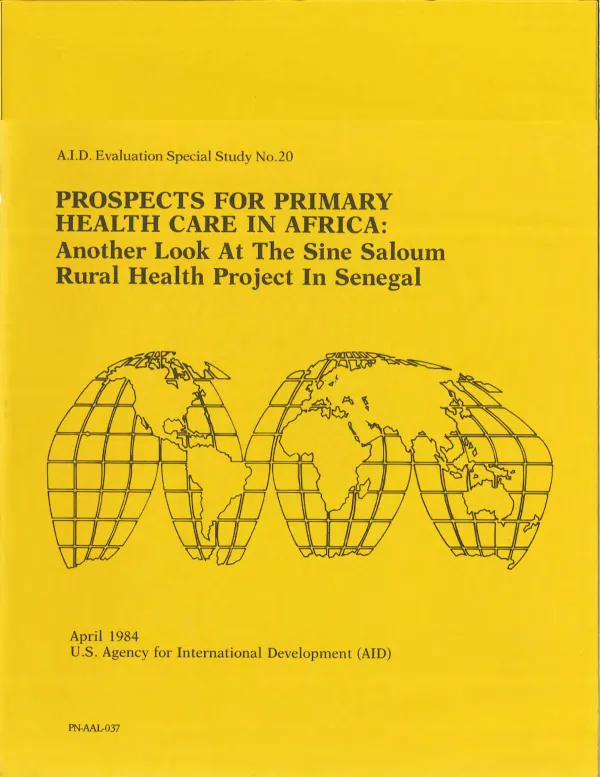
Prospects for primary health care in Africa : another look at the Sine Saloum rural health project in Senegal
Sign inUSAID. BUR. FOR PROGRAM AND POLICY COORDINATION. OFC. OF EVALUATION
Prospects for primary health care in Africa : another look at the Sine Saloum rural health project in Senegal
The history of the user-financed primary health care (PHC) project in Sine Saloum, Senegal, teaches valuable lessons for community development programs, according to this case study.
Bloom, Abby L. · 1984
Sign in to readA free account is required to download.
Abstract
The key lesson is that a thorough, critical evaluation, when taken seriously and acted upon by a donor and the host government, can save a failing program. A 1980 evaluation of the Sine Saloum project concluded that, despite the training and deployment of a large number of village health workers, the project's future was being jeopardized by several critical problems: village health huts were not viable financially; supervision and support for village health workers were inadequate; and the drug supply and transportation system were unable to cope with new demands. As a result of changes made since that evaluaton, the Sine Saloum project has turned around and community-level health services are largely self-financing. Major steps taken have included: standardization of user payments; village contributions to salaries of village health workers, construction and maintenance of village health huts, and building of drug stocks; vigorous training of community members in management and financial responsibilities; improvements in community health worker selection, training, and supervision; and more intensive project management by USAID/S. Problems remain, however. Because the services provided are mainly those that clients demand and are willing to pay for, the program is still almost exclusively curative, and efforts to introduce preventive measures such as improved health and hygiene behaviors, oral rehydration therapy, and family planning information and services have met with little success. Still lacking are the educational, outreach, and surveillance activities needed to effect long-term attitudinal and behavioral changes, as well as the indepth analysis and experimentation needed to determine if other PHC services can be user-financed and yet stay attractively priced. Finally, recent research suggests that client satisfaction and participation could be significantly improved. Appendices include tables and a 27-item bibliography (l969-83).
![Activities to improve the delivery of primary healthcare [health care] services in the Department of Boaco[, Peru] : mid-term evaluation](https://covers.devme.ai/gen/5009.webp)