INSTITUTE FOR CONTEMPORARY STUDIES. INTERNATIONAL CENTER FOR ECONOMIC GROWTH
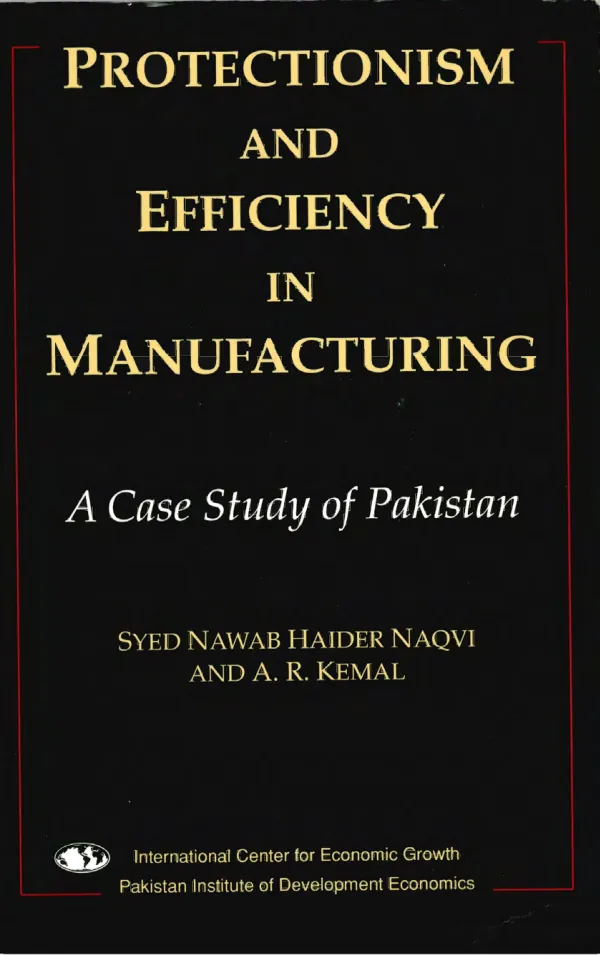
Protectionism and efficiency in manufacturing : a case study of Pakistan
In Pakistan, government policies have nurtured inefficient industries, including some that actually subtract value from the economy.
Naqvi, Syed Nawab Haider; Kemal, A. R. · 1970
Sign in to readA free account is required to download.
Abstract
Many of these policies have hurt Pakistani industries. This report explores the effects of these policies on the Pakistani economy, especially on the efficiency of large-scale manufacturing. Strategies for reform are then presented. The report concludes that export industries are the most inefficient industries in Pakistan. This has resulted from the government"s efforts to increase the number of export industries by giving substantial incentives to all kinds, including a large number of infant export industries. Another major finding is that protection of intermediate goods industries is much higher than for finished goods industries because the government can earn more revenue by taxing imports of these goods rather than final goods, which are already subject to prohibitive import duties. In general, however, protection is now mainly provided by export subsidies, rather than import quotas and tariffs. The report recommends that, contrary to standard advice, the Pakistani government may have to discriminate against inefficient export industries to establish a better balance between them and the import-substitution industries.
Connected topics
Related documents