USAID DEC
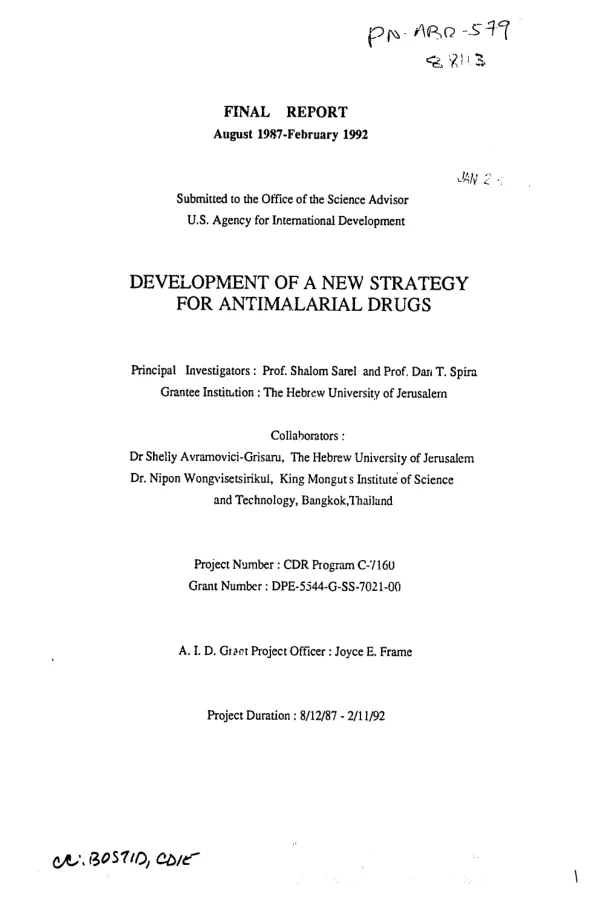
Protective mechanisms against malaria associated with glucose 6-phosphate dehydrogenase (G6PD) deficiency : final scientific report
Sign inHEBREW UNIVERSITY OF JERUSALEM. HADASSAH MEDICAL SCHOOL. DEPT. OF PARASITOLOGY
Protective mechanisms against malaria associated with glucose 6-phosphate dehydrogenase (G6PD) deficiency : final scientific report
The control of malaria has been hampered by the emergence of plasmodium parasites resistant to standard antimalarials, making development of new drugs and a vaccine a priority.
Golenser, J.; Chevion, M. +1 more · 1993
Sign in to readA free account is required to download.
Abstract
One approach is to follow natural defense mechanisms, which appear to exploit the parasite"s susceptibility to oxidant stress by favoring the buildup of reactive oxygen species (i.e., compounds) in the blood. In areas where malaria is endemic, such as certain parts of Africa, populations show a relatively high frequency of genetic variations which may, by allowing for greater buildup of these compounds in the blood, confer immunity upon their holder; one common variant is glucose-6-phosphate dehydrogenase deficiency. The research described in this report addressed three topics: (1) identifying and distinguishing different strains of plasmodium, which exhibit different antigenic responses; (2) studying the mechanisms through which oxidant stress inhibits or destroys malaria parasites; and (3) analyzing the action of three antimalarials, chloroquine, primaquine, and quinine, and in particular, whether the single electron redox reactions of these drugs are a factor in their antimalarial activity.
Connected topics
Related documents