USAID DEC
Proyecto Migracion Venezuela
The Proyecto Migracion Venezuela initiative aims to address the challenges faced by Venezuelan migrants in various cities across Colombia.
13 pages
Sign in to readA free account is required to download.
Abstract
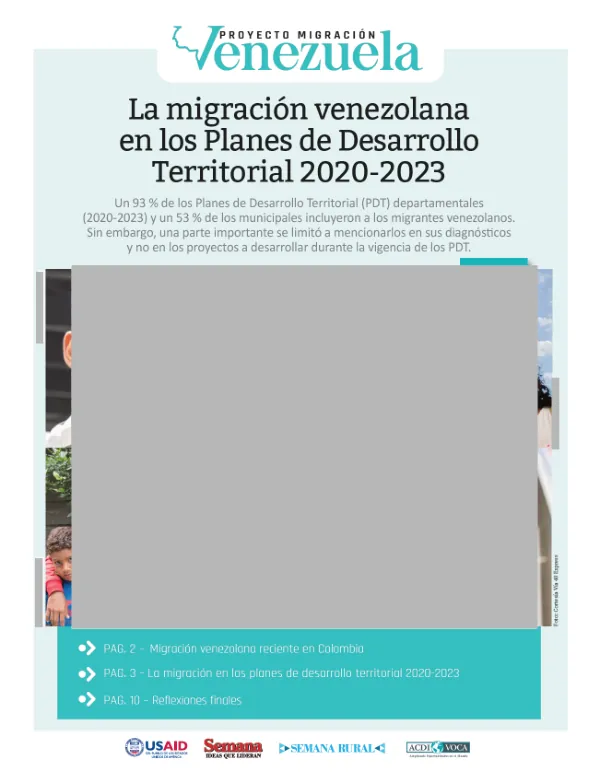
The initiative involves the development of Planes de Desarrollo Territorial (PDTs) by local governments to incorporate the needs and concerns of migrant populations. In Bogotá, the PDT includes a comprehensive characterization of the Venezuelan migrant population, highlighting their vulnerability and the entities responsible for their care. The plan includes strategies to address access to healthcare, education, and social programs for vulnerable populations, including migrants. Five programs are specifically designed to cater to the needs of migrant women, youth, and children, focusing on education, health, and cultural opportunities. Barranquilla's PDT also prioritizes the needs of Venezuelan migrants, incorporating them into the plan through "mesas sectoriales" with specific population groups. The plan characterizes the migrant population, highlighting their vulnerability and the need for targeted interventions. Five programs are designed to address the needs of migrants, including labor participation, education, health, and integration initiatives. Cúcuta's PDT prioritizes the needs of Venezuelan migrants, incorporating them into the plan through seven working groups with diverse population groups, including migrants, women, and victims of conflict. The plan includes a comprehensive characterization of the migration phenomenon, highlighting the presence of Venezuelan migrants in the city due to its proximity to the Venezuelan border. Nine projects are designed to address the needs of migrants, including initiatives for social inclusion, cultural exchange, and economic development. In contrast, Cali's PDT does not provide a clear description of the magnitude of the migration phenomenon in the city, instead attributing some of the city's demographic changes to the arrival of migrants. The plan includes two programs for vulnerable populations, including migrants, focusing on social equity and healthcare. Medellín's PDT includes a characterization of migrants in the city, emphasizing the needs of children, adolescents, and victims of conflict. The plan prioritizes education and healthcare for migrant populations, incorporating them into the Alianzas Territoriales program for the management of population migration. Río Hacha's PDT provides a brief description of the Venezuelan migration phenomenon, recognizing the increase in migrant populations and the pressure on the city's living conditions. The plan mentions the deterioration of public perception of safety and the increase in waste production due to the arrival of migrants. However, the plan does not include specific programs for migrants, instead addressing security and health concerns through a mitigation strategy. Overall, the Proyecto Migracion Venezuela initiative aims to address the challenges faced by Venezuelan migrants in various cities across Colombia, incorporating their needs and concerns into local development plans. The initiative recognizes the importance of addressing the social, economic, and health needs of migrant populations, promoting social inclusion and economic development.