USAID DEC
Quality of life -- family; pt. 1 : summary of data and recommendations for West Africa and the Caribbean; pt. 2 : data and recommendations for West Africa and the Caribbean
Sign inHOWARD UNIVERSITY. DEPT. OF HOME ECONOMICS
Quality of life -- family; pt. 1 : summary of data and recommendations for West Africa and the Caribbean; pt. 2 : data and recommendations for West Africa and the Caribbean
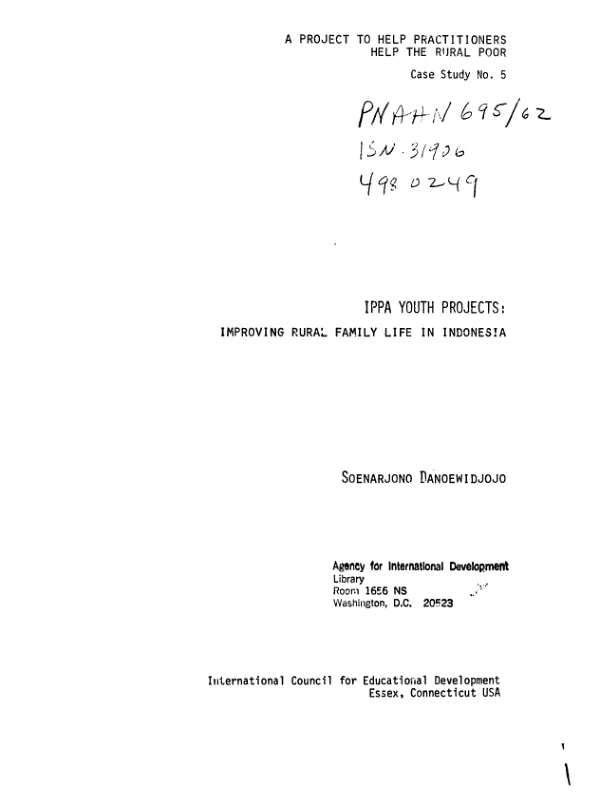
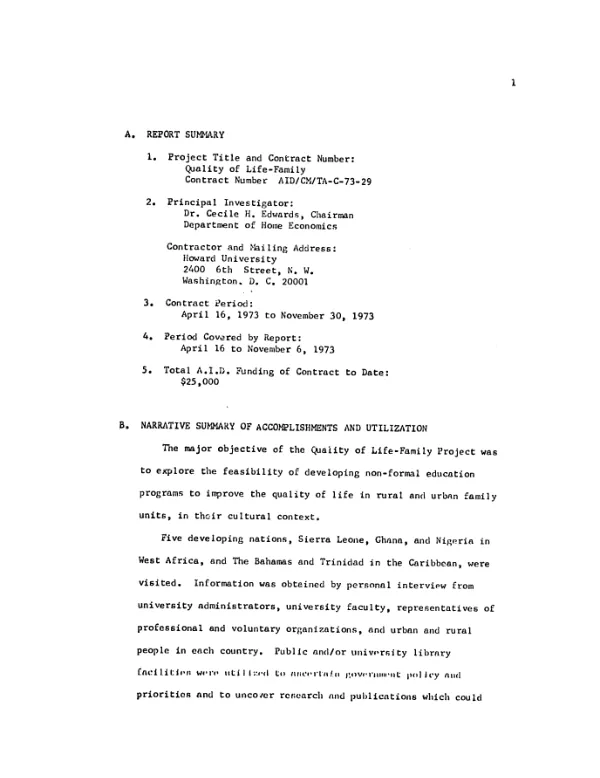
To assess the feasibility of a major research and development effort in non-formal educational techniques to improve the quality of life in rural and urban family units in less developed countries (LDC"s), the Howard University team obtained information by personal interview and from publications on families, non-formal learning, roles of women and men, paraprofessionals, research conducted and in progress, and change processes and agents.
Edwards, C. H. · 1970
Sign in to readA free account is required to download.
Abstract
The study was confined to West Africa and the Caribbean and included Sierra Leone, Ghana, Nigeria, the Bahamas and Trinidad. Great interest was shown by village and urban people in obtaining more knowledge as a vehicle to improve their quality of life. Family life subject matter was identified as that most desired by the people in non-formal education programs. Radio and family unit education appeared to be feasible channels for such programs. Seventeen quality-of-life indicators were developed from responses of the village and urban people interviewed. Measures for enabling people to move toward their perceptions of quality of life were classified for each indicator as a basis for action programs in these LDC"s.
Connected topics