USAID DEC
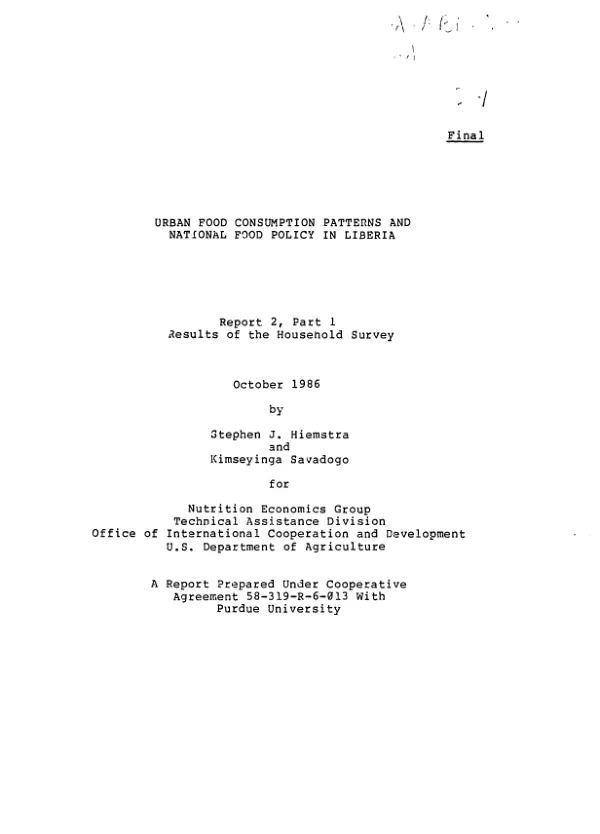
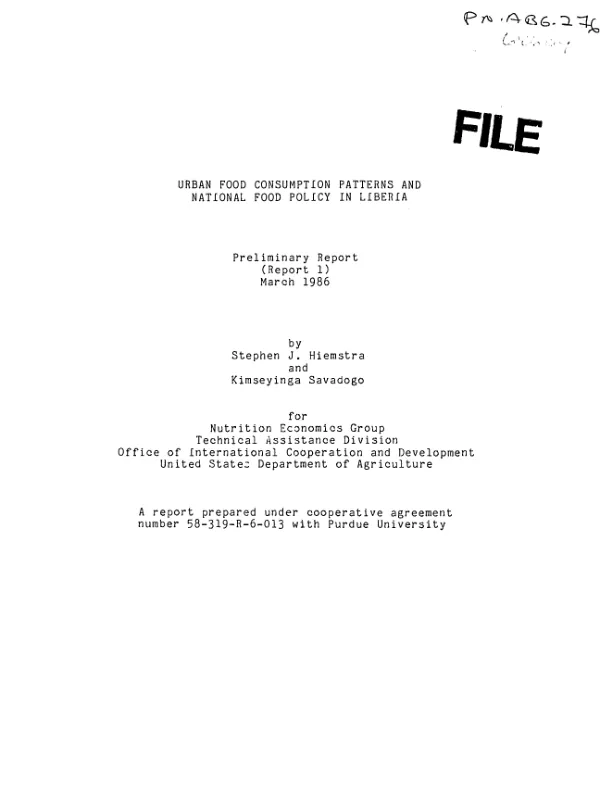
Rapid appraisal methodology for expenditure surveys : an evaluation of the Liberia model
Sign inU.S. DEPT. OF AGRICULTURE. OFC. OF INTERNATIONAL COOPERATION AND DEVELOPMENT. TECHNICAL ASSISTANCE DIV. NUTRITION ECONOMICS GROUP
Rapid appraisal methodology for expenditure surveys : an evaluation of the Liberia model
The rapid appraisal technique used to collect household expenditure data for an A.I.D.
Bonnard, Patricia · 1988
Sign in to readA free account is required to download.
Abstract
food policy research project in Liberia is herein evaluated. The report is divided into eight sections. Section I defines and compares several types of surveys commonly used in food policy research and establishes the rationale behind rapid appraisal surveys, including the specific objectives of the Liberia study. Sections II-V evaluate, respectively, the survey design, sampling techniques, the questionnaire, and survey implementation. Each section describes the procedures of the first phase (i.e., interviewing period) of the survey as well as second and third phase alterations, and includes a theoretical discussion and some practical observations. Section VI describes data processing and analysis, while Section VII presents the results from each phase, focusing on whether these are consistent between phases as well as consistent with theory and with the present body of research. It was concluded that the term "rapid appraisal" aptly describes the survey, which required 2 weeks of data collection and 4 months of data processing and analysis (including document preparation) for each phase. The existence of seasonality, as in Liberia, necessitates additional interviewing periods, extending the total timeframe to just over a year. Recommendations, presented in Section VIII, address problems of error and enumerator bias, and propose modifications which would allow transfer of the methodology to other developing country contexts.