CAMP DRESSER AND MCKEE, INC. (CDM)
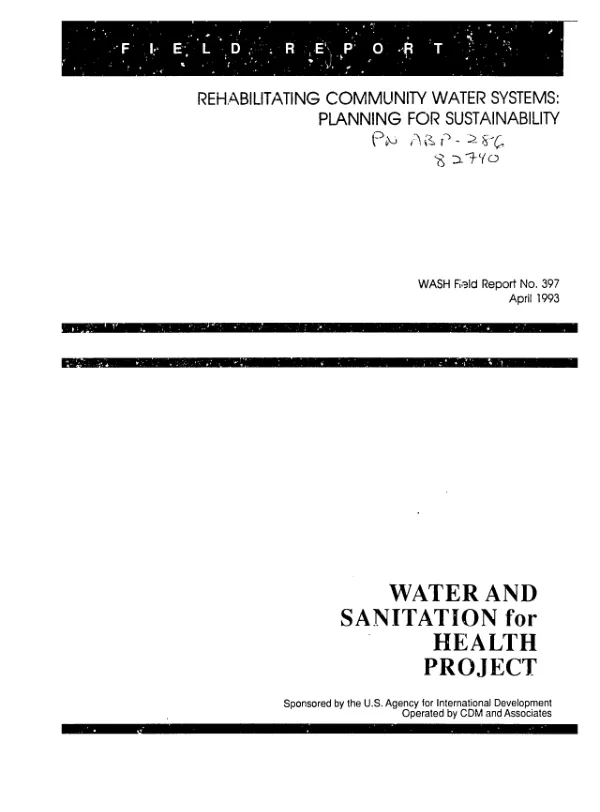
Rehabilitating community water systems : planning for sustainability
Rural water system failures are common in developing countries due to inattention to the factors needed to ensure system sustainability.
McGowan, Rick; Hodgkin, Jonathan · 1993
Sign in to readA free account is required to download.
Abstract
This manual, based on Associates in Rural Development"s overseas experience, presents a comprehensive guide to planning and implementing rural water system rehabilitation projects in communities of 200 to 10,000 people, with stress on community participation and management and intelligent planning as the key to system sustainability. Individual chapters discuss: (1) the background information needed for choosing a site, estimating procurement needs, and determining level of effort; (2) the use of rapid rural appraisals for assessing community needs; (3) the roles of community members, especially women, and of internal and external agencies in project planning and implementation, with specific attention to the agreements that define the responsibilities of each party; (4) technical aspects of rehabilitation relating to water sources (boreholes, open wells, water quality), mechanical systems (pumps, engines, or motors), water storage facilities, and the water distribution system; (5) implementation and logistics (procurement and delivery of equipment and materials, labor, transportation, subcontracting, and project supervision); (6) operation, maintenance, and repair practices; and (7) issues of finance. A final chapter summarizes the points to consider when deciding whether, given existing resources, to repair, rehabilitate, or replace existing systems, or do nothing further. Technical works are referenced throughout the text.