MINISTÉRIO DE SAÚDE
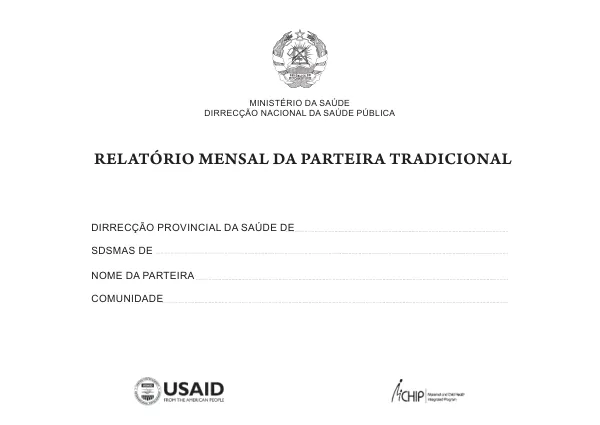
Relatório Mensal da Parteira Tradicional
The Ministry of Health's traditional birth attendant (PMA) reporting system is a crucial component of the national health strategy.
3 pages
Sign in to readA free account is required to download.
Abstract
The Direção Nacional da Saúde Pública (DNPS) and the Direção Provincial da Saúde (DPS) are responsible for monitoring and evaluating the performance of traditional birth attendants in various communities across the country. The traditional birth attendant in the community of [Nome da Comunidade] reported the following data for the month of [Mês] in [Ano]. A total of [Grávidas referidas à CPN] pregnant women were referred to the Community Health Post (CPN) for prenatal care. Of these, [Partos feitos na Comunidade] births took place in the community, resulting in [RN nascidos vivos] live births. Unfortunately, [Mortes maternas] maternal deaths were reported during this period. A total of [Grávidas referidas a parto na maternidade] pregnant women were referred to the hospital for delivery, while [Partos arrastados] births were prolonged, requiring medical attention. In addition, [RN com asfixia reanimados na comunidade] newborns required resuscitation due to asphyxia, and [RN com sinais de perigo referidos para a US] newborns were referred to the hospital due to signs of distress. The traditional birth attendant also reported [Mulheres referidas para o PF] women who were referred to the Public Health Service (PF) for various reasons. Furthermore, [Contactos com a US] contacts with the hospital were made during this period. A total of [RN nascidos na comunidade com baixo peso <2.5 kg] newborns were born with low birth weight, and [Mortes de RN na comunidade] newborn deaths were reported in the community. The data collected by the traditional birth attendant provides valuable insights into the health status of the community and the performance of the traditional birth attendant. The information will be used to inform policy decisions and improve the quality of care provided to pregnant women and newborns in the community.