USAID DEC
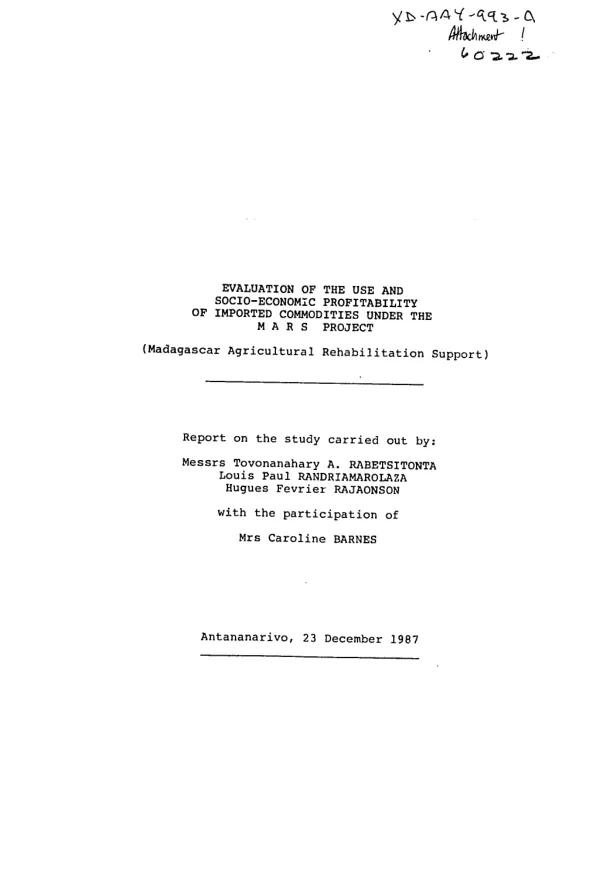
Report of end use study of the commodity import component of the Madagascar agricultural rehabilitation support (MARS) I project
Sign inUSAID. MISSION TO MADAGASCAR
Report of end use study of the commodity import component of the Madagascar agricultural rehabilitation support (MARS) I project
Evaluates commodity import component of a project to help rehabilitate Madagascar's agricultural sector.
Robinson, Peter MacPherson · 1986
Sign in to readA free account is required to download.
Abstract
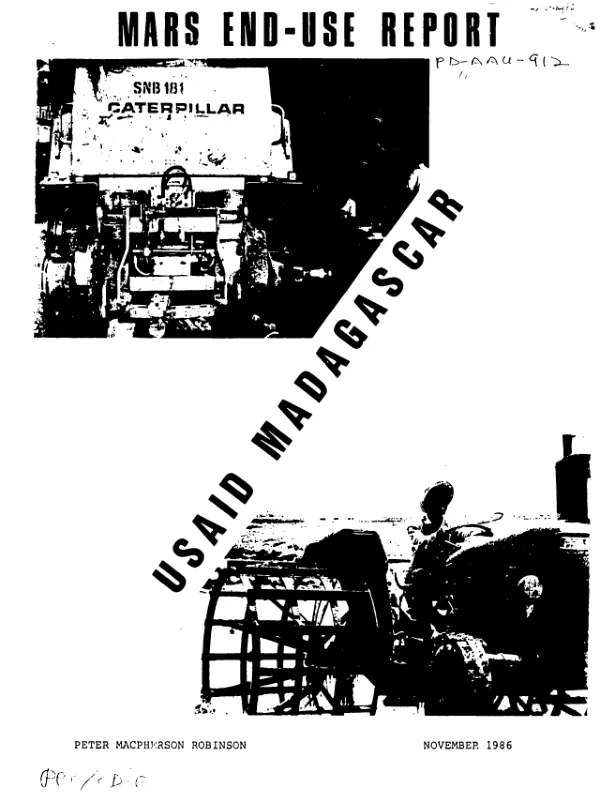
End-use evaluation covers the period 4/85-11/86 and is based on a survey of direct and indirect beneficiaries and on interviews with Government of Madagascar (GOM) and donor officials. The project-provided infusion of foreign exchange and commodities in the Malagasy economy has successfully supported reforms instituted under the GOM's Public Investment Program (PIP). As a result of PIP reforms, farmers are more confident in the future of agriculture and are seeking means to increase crop production. The timely availability of U.S. tractors imported under the project provides such a means. All the Ford tractors already in-country are being used for agricultural production. In nearly every case, purchase of the tractors enabled farmers to work land which had lain fallow in previous years. Employment has increased among the families of those well-off enough to buy a tractor, and new jobs have been created for others as well. Importation of Caterpillar spare parts has allowed important work, mainly in the private sector, to continue in road construction (41% of the value of spare parts) and in industrial agriculture and food production (26%), sectors especially targeted by the Project Paper (although the latter sector was dominated by parastatals). Beneficiaries of the commodity import program, apart from the GOM and the U.S. Government, include local private sector importers, U.S. manufacturers, participating farmers, parastatals, international and local private enterprises, and poor rural farmers and rural communities. These latter have benefited from increased employment, coupled with better access for their products through road construction and other civil engineering projects. In the future, small self-help projects, using funds generated from the sale of commodities, could further help improve production and the quality of life in rural areas, and thus could help stem urban migration, which is occurring at an alarming rate. Adherence solely to short-term, bottom-line logic can lead to decisions that are economically sound but socially disastrous. In the short to medium term, it is likely that foreign exchange constraints will continue, and that further commodity import assistance specifically targeted to the agricultural sector could provide a sound base for economic recovery in Madagascar and further support the PIP. (Author abstract, modified)
Related documents