USAID. BUR. FOR AFRICA
Report on `meeting with policymakers : MADIA and aid effectiveness"
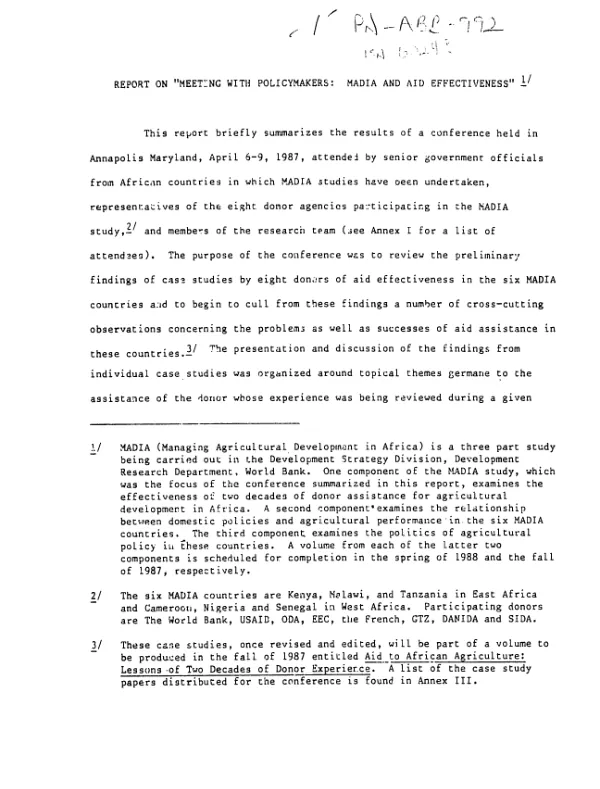
This report briefly summarizes the results of a conference held in Annapolis, Maryland, April 6-9, 1987, attended by senior government officials from African countries in which MADIA (Managing Agricultural Development in Africa) studies have been undertaken, representatives of the 8 donor agencies participating in the MADIA study, and members of the research team.
1987
Sign in to readA free account is required to download.
Abstract
The purpose of the conference was to review the preliminary findings of case studies of aid effectiveness in the 6 MADIA countires and to cull from these findings crosscutting observations concerning the problems and well as successes of aid in these countries. The presentation and discussion of the findings from individual case studies was organized around themes germane to the donor whose experience was being reviewed during a given session; for example, the DANIDA paper focused on technology transfer by small donors and the French paper focused on export crop promotion. The conference was particularly useful in at least 3 respects. First, comparing the experience of various donors enabled participants to identify a number of often thorny problems shared by almost all donors. The comparisons also revealed the particular constraints faced by donors depending on their size, overall development assistance objectives, and the constituency pressures to which they are subject. The insights that emerged from this comparative analysis of the ways in which donors persue their individual objectives will help donors to examine and understand better their own individual programs and modes of operation and enable donors to improve their interaction with recipient countries and other donors. A second particularly valuable component of the meetings was the contribution of senior government policymakers who commented on the various ways in which the differing, and sometimes conflicting, substantive interests and operational modes of donor programs affect recipient country efforts to promote agricultural and rural development. Accommodating the varying agenda of donors and maximizing the benefits of divergent donors" programs is a continual challenge for recipient countries. Providing specific examples of these donor-initiated difficulties should increase the sensitivity of donors to such difficulties and promote both better individual efforts and greater communication among donors. A third set of insights is more specific to each donor. Here the focus is on the impact of individual donor programs, particularly explanations for the success achieved by donors in specific substantive areas, e.g., A.I.D. in agricultural training, the earlier French expertise in promotion of export crop production, etc. This topic is addressed in considerable detail in each of the donor case studies. (Author abstract)