USAID DEC
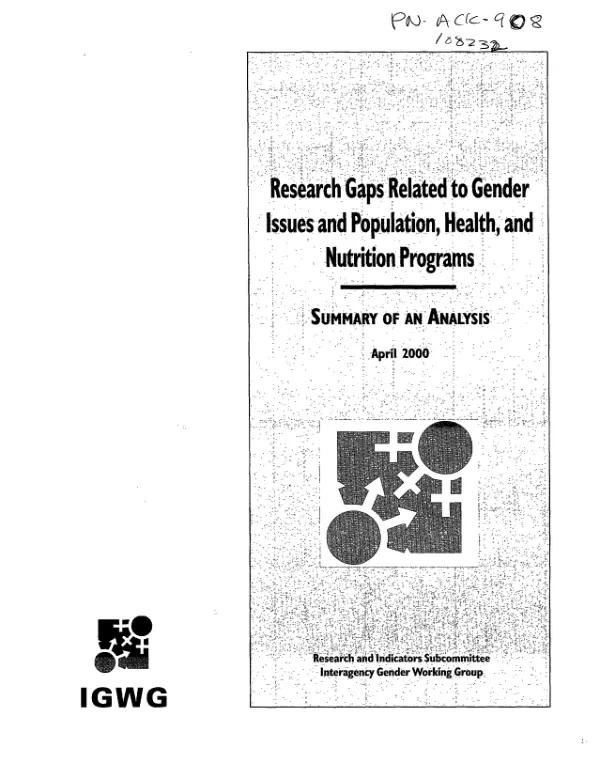
Research gaps related to gender issues and population, health, and nutrition programs : summary of an analysis
Sign inINTERAGENCY GENDER WORKING GROUP (IGWG)
Research gaps related to gender issues and population, health, and nutrition programs : summary of an analysis
Gender, or the socially defined roles and status of women and men in societies and the relative power associated with these roles, is an important determinant of women"s and men"s reproductive health (RH).
2000
Sign in to readA free account is required to download.
Abstract
Clear guidance on how to make RH programs gender-sensitive, however, requires research, including biomedical, policy/programmatic, and social science studies. This summary of a longer document on research gaps associated with gender and RH (PN-ACK-907), first outlines the fundamentals of "gender-sensitive" RH research. Next, it highlights the gender issues related to 15 aspects of RH that were included in the 1994 International Conference on Population and Development (ICPD) and the 1995 Fourth World Conference on Women (FWCW) agendas. These 15 aspects are: adolescents; behavior change communication; child survival; environmental and occupational health; female genital cutting; HIV/AIDS/sexually transmitted infections (STIs) and condom use; infectious diseases and RH; infertility; post-abortion care; post-menopausal women; quality of care; RH and reproductive rights; safe motherhood; violence against women; and other issues, such as the imbalance of power between men and women. The concluding sections of the summary provide a short bibliography of research studies on the topic that best exemplify a gender perspective, as well as a matrix that includes the top three to five gender-related research issues for each aspect of RH. (Author abstract, modified)
Connected topics
Related documents
Documents in this collection
 2000
2000USAID DEC
Research gaps related to gender issues and population, health, and nutrition programs : an analysis
Open record 1997
1997USAID DEC