CHECCHI AND CO. CONSULTING, INC. (CCCI)
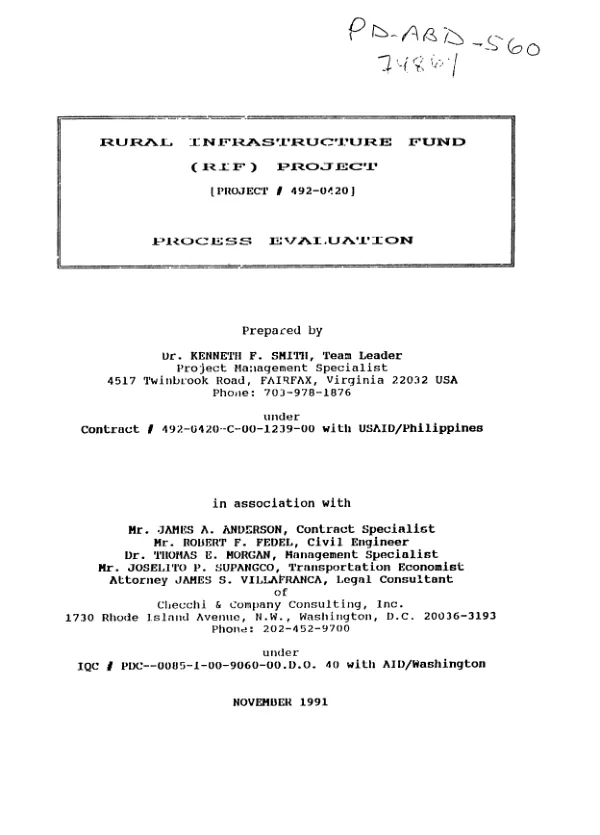
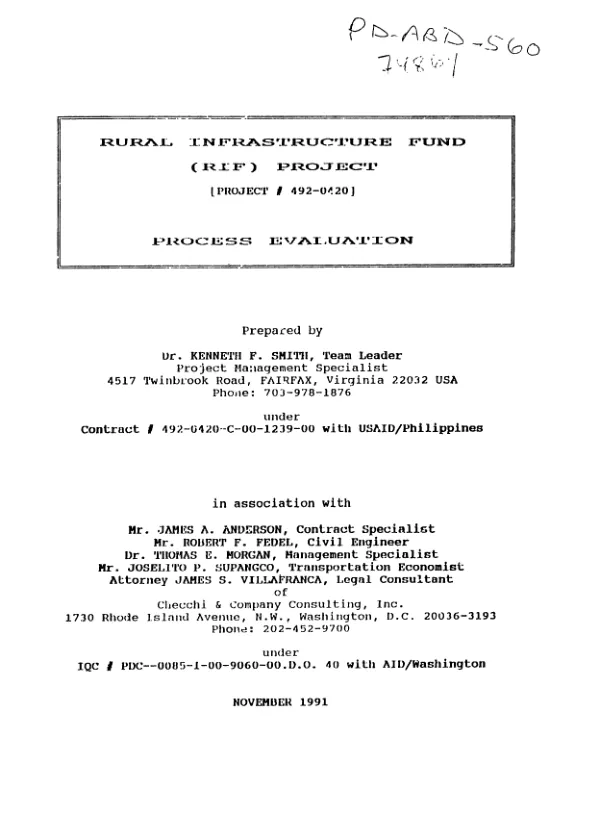
Rural infrastructure fund (RIF) project (project no. 492-0420) : process evaluation
Evaluates a project to develop infrastructure, particularly roads, bridges, seaports, and airports, to support economic growth in rural areas of the Philippines.
Smith, Kenneth F.; Anderson, James A. · 1991
Sign in to readA free account is required to download.
Abstract
Interim evaluation covers the period 8/87-10/91. The project got off to an exceedingly slow start due to a series of unexpected problems, chief among which were the protracted and eventually fruitless contract negotiations between the Government of the Philippines (GOP) and a U.S. contractor, which consumed 40% of the original anticipated life of the project. The project was then granted a 2-year extension. Once the project got underway, however, implementation was reasonably satisfactory. Three major road subprojects (including bridges) are under construction, and a smaller fourth spur has been given the go-ahead. Of the six seaports slated for construction, one has been completed and the other five are nearing completion; navigational aids equipment has been delivered, technical training provided, and the equipment is operational. A number of other relatively minor subprojects have been given notices to proceed, or are awaiting such notice subject to availability of funds. It is reasonable to expect that all the subprojects underway and in the pipeline, will be completed by the 12/94 PACD. Key recommendations include the following: (1) improved GOP/USAID review of contractor selection under host country contracting; (2) formal definition by the GOP of the lines of authority in project implementation; (3) accelerated GOP procedures for contractor reimbursement and for resolving right- of-way, customs clearance, and tax reimbursement issues; and (4) establishment of a formal procedure by USAID/P and the GOP to accelerate issues resolution. Four major lessons were learned. (1) Host country contracts require almost as much attention from USAID as direct contracts, and are less predictable. (2) Greater attention should be paid to developing detailed cost estimates and projections. (3) Time should be allowed for unforeseeable problems, especially during project start-up. (4) Commitment rates are a more appropriate indicator of progress in infrastructure projects than actual expenditures.