ACTION PROGRAMS INTERNATIONAL
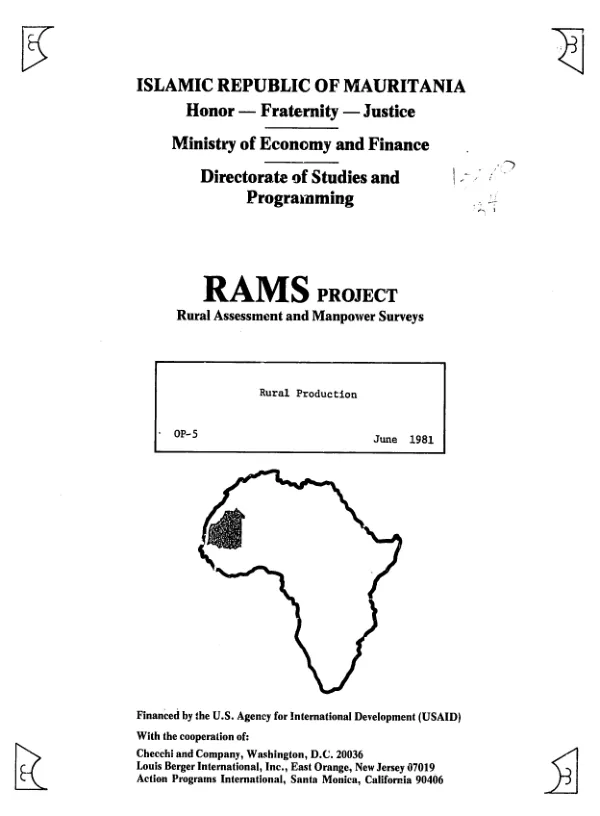
Rural production
Grain production in Mauritania has been falling by 5.2% per year since 1961.
1981
Sign in to readA free account is required to download.
Abstract
Previous reports from the Rural Assessment and Manpower Surveys (RAMS) Project have shown that the country"s rural production depends on climatic factors, principally rainfall. This RAMS report presents and evaluates options for minimizing risk of famine through better production techniques in agriculture, livestock raising, and fisheries. Rain-fed agriculture can, through modest costs in improved technology, intercropping, and animal traction, contribute up to 30% of grain for domestic consumption by 2000. Until irrigated agriculture reaches maximum development, rain-fed agriculture will save the Government of Mauritania $30 million in grain imports while providing employment to about 100,000 persons, if technical and human/organizational constraints can be overcome. Lack of rainfall is a major constraint to herding. Improvement can be made in herd productivity and range management, but these require government intervention, including compulsory reduction in meat consumption. The fisheries sector will require capital investment to create fish ponds for inland fisheries, and to provide organization, infrastructure, equipment, and training to expand traditional and semi-industrial marine fishing.
Related documents