USAID. MISSION TO INDONESIA
Small scale irrigation management project (SSIMP)
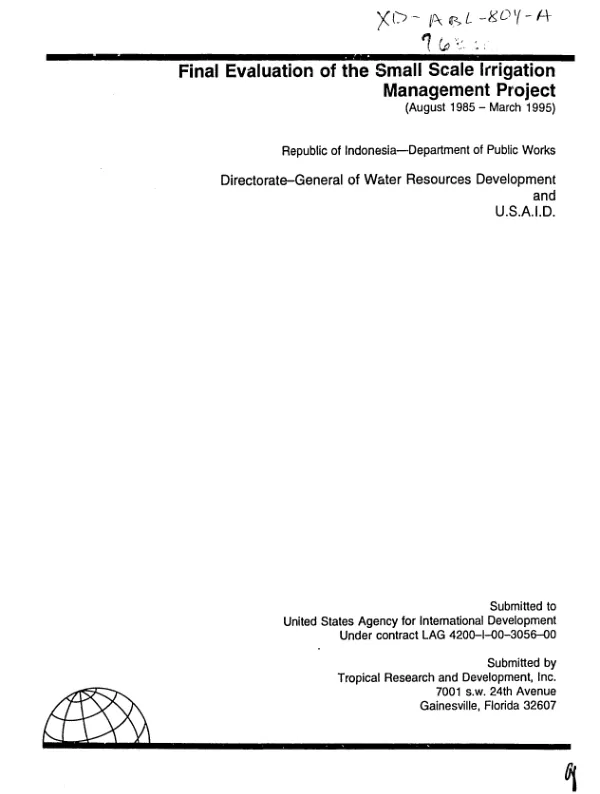
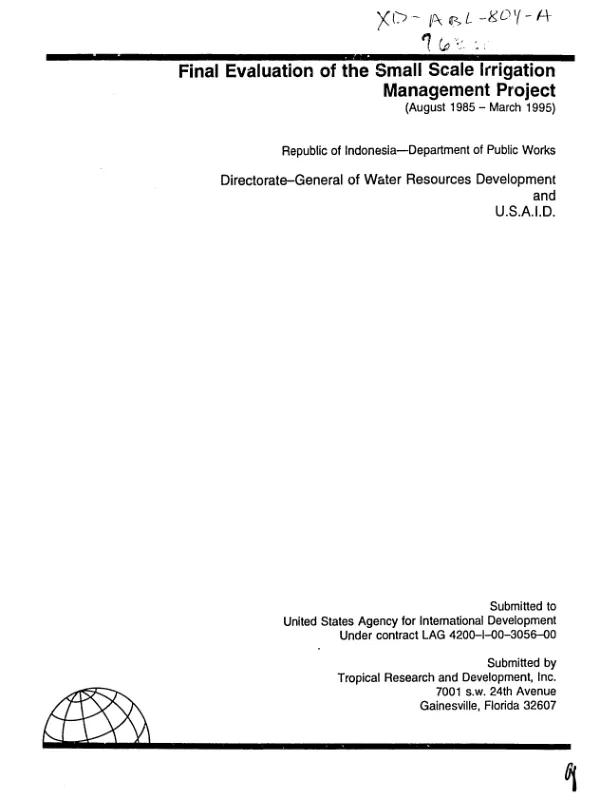
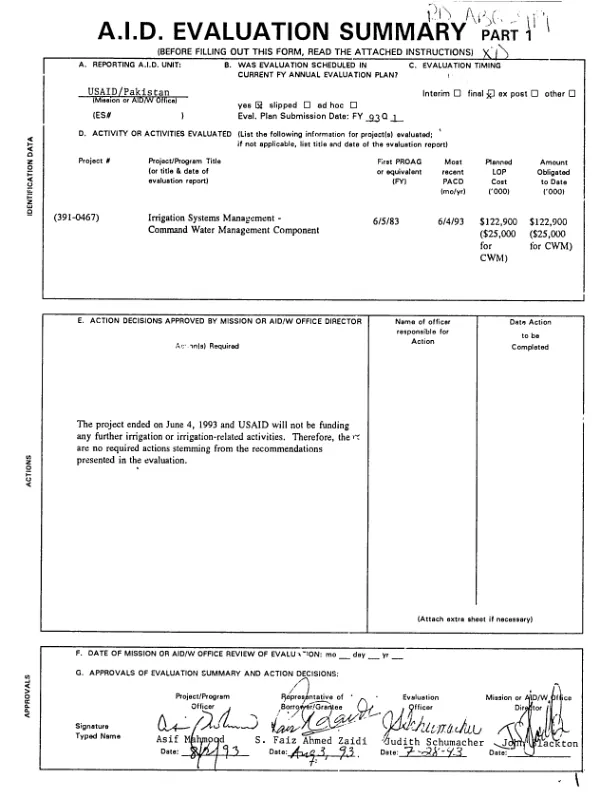
Summarizes attached final evaluation (XD-ABL-804-A) of a project (1985-4/95) to increase the capacity of the Provincial Water Resources Services (PWRS) and farmer water user associations (WUAs) in implementing sustainable irrigation systems in selected Eastern Islands of Indonesia.
1995
Sign in to readA free account is required to download.
Abstract
The project made some impressive accomplishments, particularly the universal enthusiasm of PWRS field staff and the increased participation of the WUAs from initial design through construction to operation and maintenance (O&M). Project managers all agreed that their work had been made both easier and more effective by the farmers" input, especially by the tertiary system development. WUA participation stemmed from the fact that they had been consulted and thus felt a sense of investment and responsibility, as well as from the efforts of WUA organizers. An impressive approach for the site selection and design of the surface water systems was developed under the project. A considerable amount of engineering, economic, environmental, and social data was collected prior to site selection. Local consultants and contractors acknowledged that they had been strengthened by being held to stricter standards and by having received training under the TA component. Further, USAID"s policy that the TA team remain in a strictly advisory capacity allowed the local contractors to perform the actual design and construction. Training was the major contribution in strengthening PWRS staff, with 27 staff members receiving masters degrees and over 300 either formal or on-the-job training in technical and construction management skills. A similar, though less ambitious, approach was developed for site selection and design of the groundwater systems. The evaluation team visited three surface water and about 10 groundwater sites and found the quality of construction to range from satisfactory to excellent. In some cases, poor construction had been rectified after payment for unsatisfactory work had been withheld. The primary concern now is the viability of the Government of Indonesia"s O&M programs for surface water systems. Farmers are now entering the critical phase of operating and maintaining the tertiary and quaternary portions of the system. They can do this successfully, however, only if PWRS provides good maintenance on the main system. The PWRS must also fully introduce the Irrigation Service Fee program to prepare farmers to be fully responsible for the tertiary systems. An additional concern is continuing provision of guidance to the WUAs in both O&M and agricultural practices. The surface water systems are new, and the farmers are not familiar with the irrigated crops. Lessons learned included the following. (1) The project was too ambitious in terms of area and number of sites: 10 surface water and 520 groundwater systems were too many, particularly when project technologies consisted of surface diversion, lift irrigation, reservoirs, and groundwater. (2) The decentralization of authority to the provincial level was in line with DGWRD (Directorate General of Water Resources Development) policy, and was supported by the project through training. (3) The WUA organizer program was enthusiastically accepted for application in future irrigation development in the eastern area. (4) Local private contractors were inexperienced in designing dams and in construction management, particularly in managing cash flow.
![Initial development of small-scale irrigation management project (SSIMP) -- experimental groundwater irrigation systems in NTT [Province of Nusa Tenggara Timur]](https://covers.devme.ai/gen/7415.webp)
![Initial development of small-scale irrigation management project (SSIMP) -- experimental groundwater irrigation systems in NTT [Province of Nusa Tenggara Timur]](https://covers.devme.ai/gen/72303.webp)