USAID. MISSION TO THAILAND
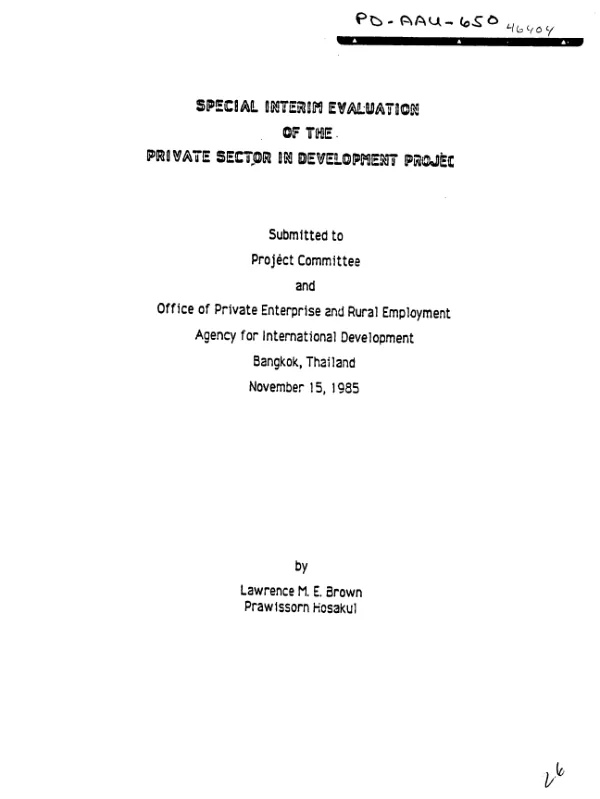
Special interim evaluation of the private sector in development project
Evaluates project to increase private sector investment in income-generating, export-oriented, natural resource-based Thai ventures located outside of Bangkok.
Brown, Lawrence M. E.; Hosakul, Prawissorn · 1985
Sign in to readA free account is required to download.
Abstract
Mid-term evaluation covers the period 5/83-6/85 and is based on document review and interviews with private sector personnel. Progress has been slow; only the Thai Joint Agricultural Consultative Committee (TJACC) has been on schedule and has shown results, developing linkages between Thai and U.S. agribusiness and actively furthering the development of several investment opportunities. No substantive changes have resulted from policy dialogue, which has been stressed to the detriment of developing private sector capabilities to improve the investment environment. Furthermore, the Joint Standing Committee of Commerce, Industry, and Banking (JSC) has not served as the implementing agency for dialogue as planned, reducing the potential private sector role. Due to staffing limitations, the Board of Investment (BOI) has delegated its project responsibilities to consultants. Finally, there is no overall implementation plan, nor has the Project Committee (PC), which has deemphasized its project administration role, required or reviewed any such plan for individual project activities. Nonetheless, progress is being made. Private associations are concentrating more on issues to raise before the public-private consultative committee, and more private sector representatives are involved in policy. A 7/84 workshop was particularly productive, stimulating the first progress in formulating studies of policies and regulations. Overall, it is likely that the project will eventually increase private sector investment and possible that it will have a long-term impact on the investment environment. The project has shown that: (1) goals and purposes should be concise and easily understood - the breadth of this 3-part project defies specificity and diminishes control; (2) a realistic, detailed implementation plan and schedule developed with the input and commitment of implementors is needed - the project"s lack of targets and benchmarks lessens implementors" sense of obligation and limits monitoring capacities; (3) administrative analysis in project design should verify that capacities are as claimed - this project has suffered from the inability of the BOI and the JSC to provide adequate staffing. It is recommended that: (1) the PC adopt an active role, including development of workplans; (2) the BOI develop a plan to show the benefits to be derived from the consultant-designed investment promotion program; (3) every effort be made to transfer responsibility for dialogue to the private sector JSC and to be more flexible in accepting study proposals; and (4) the TJACC be given resources adequate to retain staff and establish a revolving fund for feasibility studies.