INTERNATIONAL UNION FOR CONSERVATION OF NATURE AND NATURAL RESOURCES (IUCN)
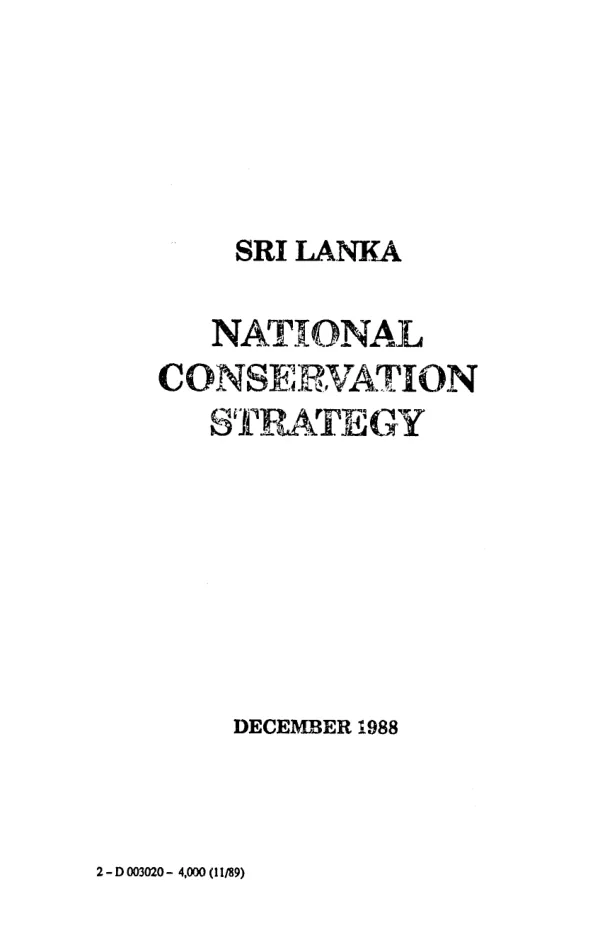
Sri Lanka : national conservation strategy
In Sri Lanka, sharp increases in population and rising demands for higher living standards have destroyed the balance maintained by traditional land use practices.
1988
Sign in to readA free account is required to download.
Abstract
The country"s dense forest cover has dwindled to 27% of land area. Soils have been significantly degraded through monocultures, intensive agriculture, injudicious and widespread use of agrochemicals, and unplanned clearing of new and even marginal lands. Property developers have filled in mangrove swamps and estuaries for building sites, while lobster breeding grounds have been nearly swept clean to supply a lucrative export market. Following a summary of Sri Lanka"s environmental status, this report describes the country"s efforts in sustainable management of forests, wildlife, genetic resources, and coastal zone resource systems. The report then identifies human activities involving the environment, covering eight areas -- land use, human settlements, housing, agricultural systems, fisheries, energy, industries, and cultural resources. Major conservation constraints related to population pressure, policy and planning, legislation, institutional infrastructure, personnel, and public awareness of and support for environmental conservation are also discussed. Final sections outline Sri Lanka"s national conservation strategy and implementation plan.
Connected topics