OPINION RESEARCH CORP. MACRO INTERNATIONAL INC. (ORC MACRO)
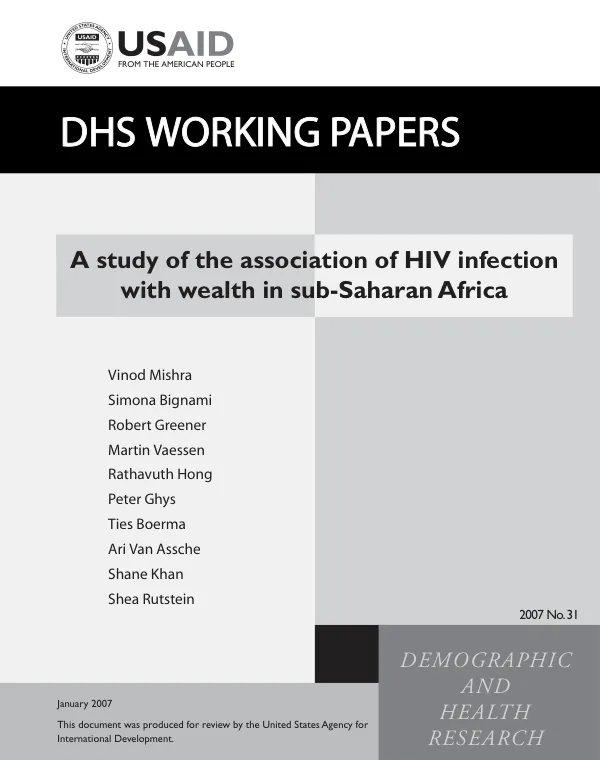
Study of the association of HIV infection with wealth in sub-Saharan Africa
This study examines the association between wealth and HIV serostatus to identify what specific characteristics and behaviors of the wealthier are associated with HIV infection, and to what extent confounding factors such as place of residence and other risk factors mediate this association.
Mishra, Vinod; Bignami, Simona · 2007
Sign in to readA free account is required to download.
Abstract
This study finds that, contrary to evidence for other infectious diseases and theoretical expectations, in sub-Saharan Africa HIV prevalence is not disproportionately higher among adults living in poorer households. In all eight countries included in this study, wealthier men and women tend to have higher prevalence of HIV than poorer ones. Accounting for various underlying factors and proximate determinants explains much of this positive association, but in most cases wealthier adults remain at least as likely as poorer adults to be infected with HIV. The findings of this study question the basis for poverty-driven programs for HIV/AIDS prevention in developing countries. When planning and designing prevention, care, and treatment efforts, program planners and policymakers need to adjust to the reality that HIV prevalence is not necessarily higher among the poorer. (Author abstract)
Connected topics