USAID DEC
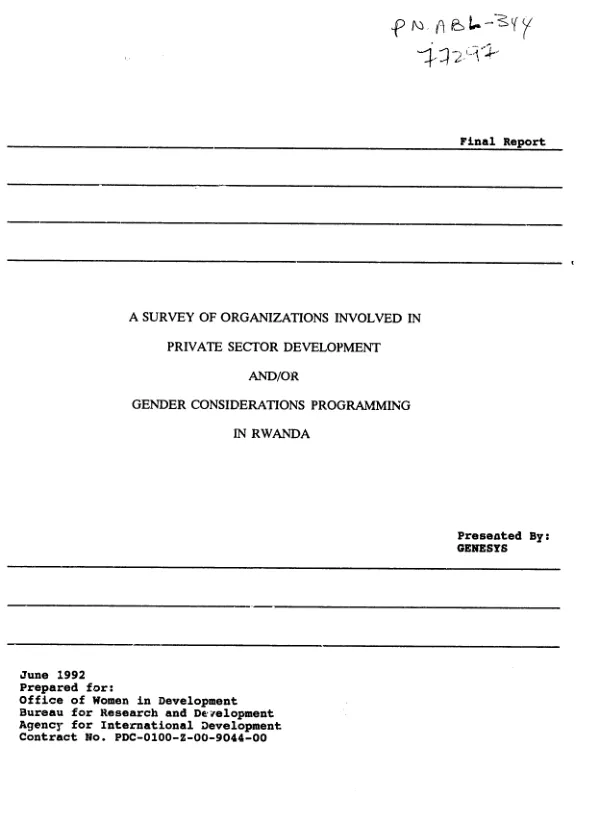
Survey of organizations involved in private sector development and/or gender considerations programming in Rwanda
Sign inMANAGEMENT SYSTEMS INTERNATIONAL, INC. (MSI)
Survey of organizations involved in private sector development and/or gender considerations programming in Rwanda
Personnel from 19 organizations implementing private sector development projects in Rwanda were interviewed in an effort to identify constraints to private sector development, with special attention to the problems of women entrepreneurs.
Lent, Drew; Dicker, Hortense · 1992
Sign in to readA free account is required to download.
Abstract
The interviewees represented international donors, international or indigenous NGO"s, a commercial bank, and a government service. The most frequently identified constraint was a lack of government enthusiasm and support for private sector development. Although major regulatory reforms have been enacted, numerous problems exist in implementation. For example, new rules governing the foreign exchange market require entrepreneurs to amass a large sum of money to import, which effectively prohibits smaller businesses from importation and subsequent sales. Even for larger firms, import/export arrangements are still an onerous task, requiring many trips to the Ministry and the bank. Many of the respondents cited a lack of entrepreneurial spirit or motivation among Rwandan entrepreneurs. In a typical market, everyone is selling the same thing, while many other desirable items are simply not for sale. Several also mentioned a need for financial management and other business skills, as well as the high tax rates placed on business revenues. The reaction to the government-controlled chamber of commerce was unanimously negative. For women entrepreneurs, serious constraints are posed by cultural prohibitions on women owning property or receiving credit.