DEVELOPMENT ASSOCIATES, INC.
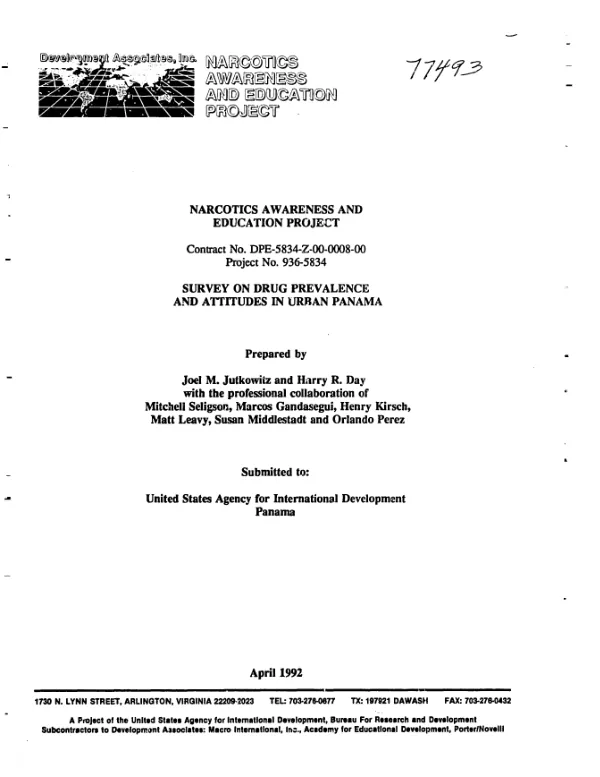
Survey on drug prevalence and attitudes in urban Panama
Drug abuse in Latin America is primarily an urban phenomenon.
Jutkowitz, Joel M.; Day, Harry R. · 1992
Sign in to readA free account is required to download.
Abstract
This study -- based on interviews with adults aged 12-45 -- measures levels of drug use in Panama"s three principal urban centers (Panama City, San Miguelito, and Colon) and, for comparison, one small urban center, Penome. Overall, alcohol is the most frequently used drug. Panamanians differ from other Latin American and Caribbean populations in that they use analgesics (narcotics-based painkillers) more than tobacco, and in their relatively high use of cocaine and other coca derivatives. The major difference between Penome and the larger cities is that the cities have higher overall prevalence levels, especially for marijuana, inhalants, cocaine, bazuco (cocaine paste), and crack. Generally, males have tried more drugs than women, and are more likely to be current users of tobacco, marijuana, alcohol, and cocaine; females are more likely to be current users of analgesics and sedatives. Cocaine, crack, and bazuco are used more frequently by younger age groups, while marijuana is more popular with those over 35. In sum, Panama"s drug problem, while concentrated among a small portion of the country"s population, is significant in its intensity, with a high frequency of current use of marijuana, cocaine, crack, bazuco, and inhalants.