USAID DEC
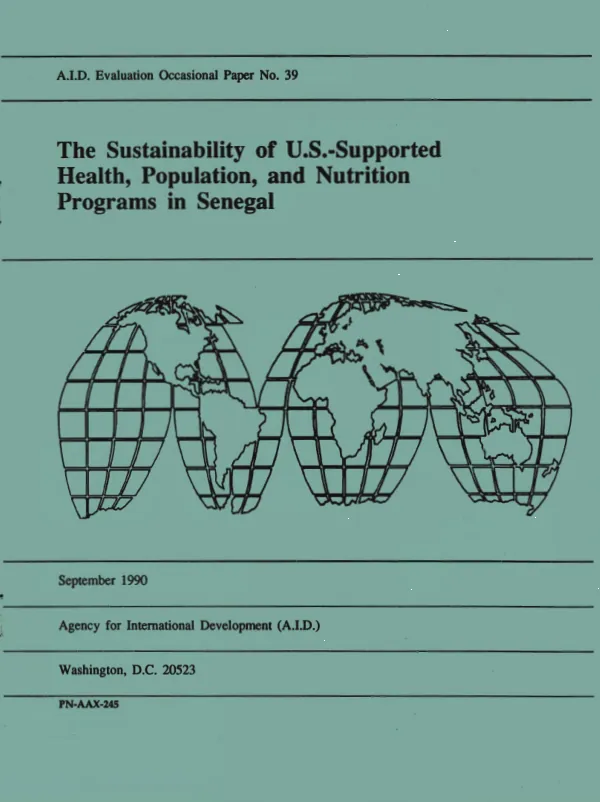
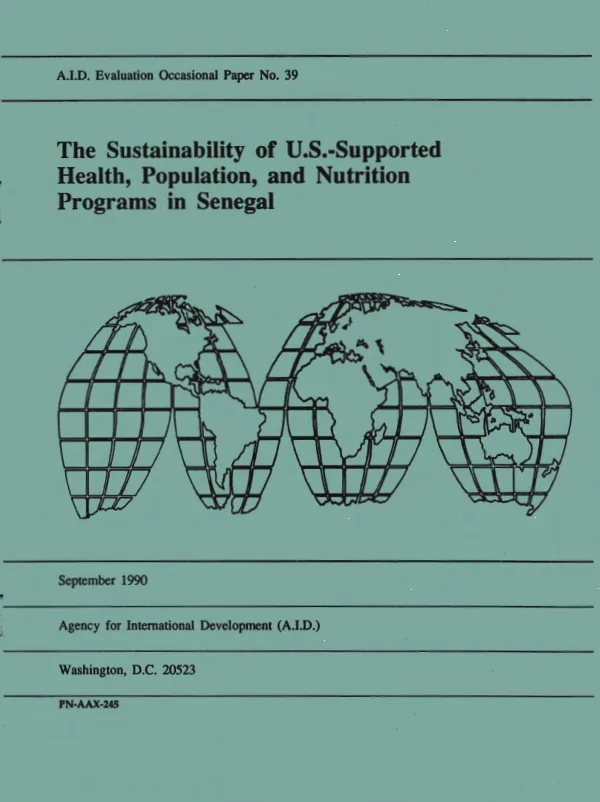
Sustainability of US-supported health, population, and nutrition programs in Senegal
Sign inUSAID. BUR. FOR PROGRAM AND POLICY COORDINATION. CENTER FOR DEVELOPMENT INFORMATION AND EVALUATION (CDIE)
Sustainability of US-supported health, population, and nutrition programs in Senegal
This evaluation of the health care components of two projects -- Bakel Irrigated Perimeters and Casamance Rural Development -- in Senegal focuses on the sustainability of the projects, which were implemented during the period 1977-1985.
Adamchak, Susan|Aguillaume, Claude J. · 1990
Sign in to readA free account is required to download.
Abstract
One component of the Bakel project, an epidemiological survey, was unsustained, while another component, primary health services, was fully sustained; in fact, activities of local communities and of the Ministry of Health have further improved primary health care since the end of the project. The health and nutrition component of the Casamance project was moderately sustained. The modest success of these activities is largely attributed to contextual factors, including: weak state institutions and a lack of commitment to social welfare; an economic crisis which limited the government's ability to continue project funding as well as the beneficiaries' ability to pay for services; fragmented and unstable implementing agencies; and weak national commitment to primary health care and family planning. However, even in this unfavorable environment, several steps could be taken to enhance sustainability: (1) integrate projects into existing administrative structures; (2) ensure that the national government absorbs progressively larger portions of project costs and/or develops cost recovery mechanisms; (3) provide training in both technical and administrative subjects; (4) avoid short-term projects and include significant TA components; (5) design projects with visible benefits that create demand for project services; and (6) include community participation mechanisms in projects with cost recovery.