USAID. MISSION TO CAMEROON
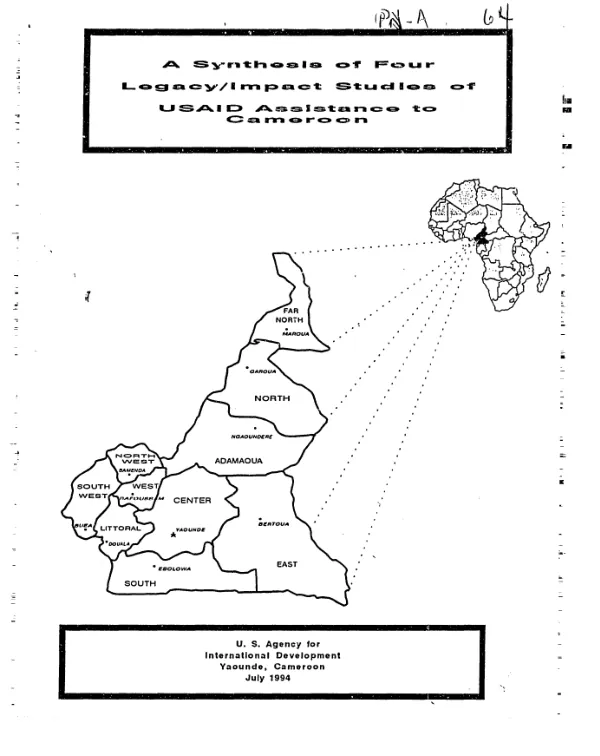
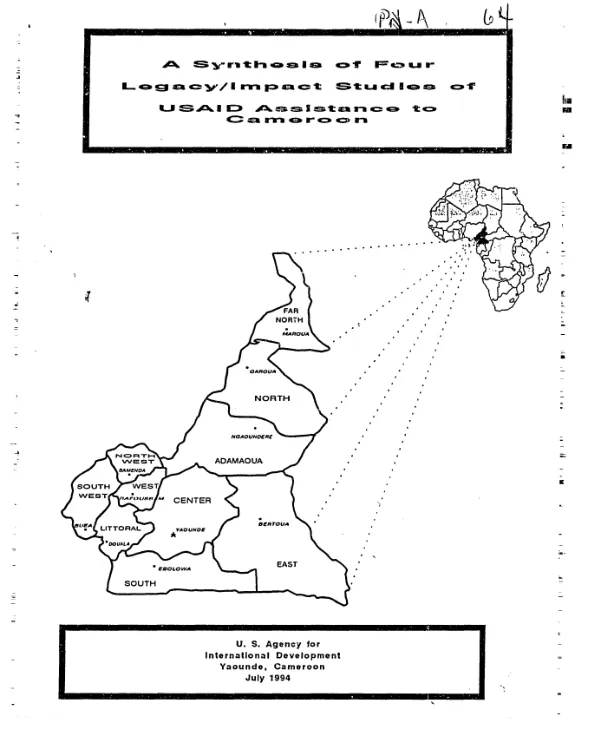
Synthesis of four legacy/impact studies of USAID assistance to Cameroon
After the closing of the USAID Mission to Cameroon in 11/93, four impact assessments were conducted to document the achievements and the legacy of more than 30 years of USAID development assistance in the areas of health and population, economic policy reform, agriculture and natural resources, and participant training.
1994
Sign in to readA free account is required to download.
Abstract
This report synthesizes the impact assessments, detailing specific achievements and highlighting more than 30 lessons learned. In summary, the report finds that thousands of Cameroonians -- farmers, students, professionals, women, and children -- have benefited from USAID projects to promote private sector-led markets, improve health care, finance long- and short-term training, and support agricultural and environmental research and education. Mores specifically, USAID made substantial headway in liberalizing the arabica coffee market and introducing a marketing information system for arabica farmers; coffee farmers have been rewarded with significant income gains. In the health arena, USAID helped to reorient primary health care by promoting (1) the decentralization of planning and management to the district level, (2) co-management and co-financing, and (3) the full integration of preventive with curative care and of family planning into public and private health facilities. USAID also supported a model program in HIV prevention through social marketing of condoms. In agriculture, USAID"s longstanding commitment to research in staple crops resulted in improved varieties and production increases; USAID was also instrumental in training hundreds of personnel in agriculture and other sectors. To support the environment, USAID fostered local NGO environmental policy advocacy and helped to fund research in Korup National Park, one of the oldest rainforest ecosystems in the world.