USAID DEC
Training Manual for Quality Standards and Operational Guidelines for Clinical Service Delivery in Primary Health Care in Iraq
Sign inMINISTRY OF HEALTH
Training Manual for Quality Standards and Operational Guidelines for Clinical Service Delivery in Primary Health Care in Iraq
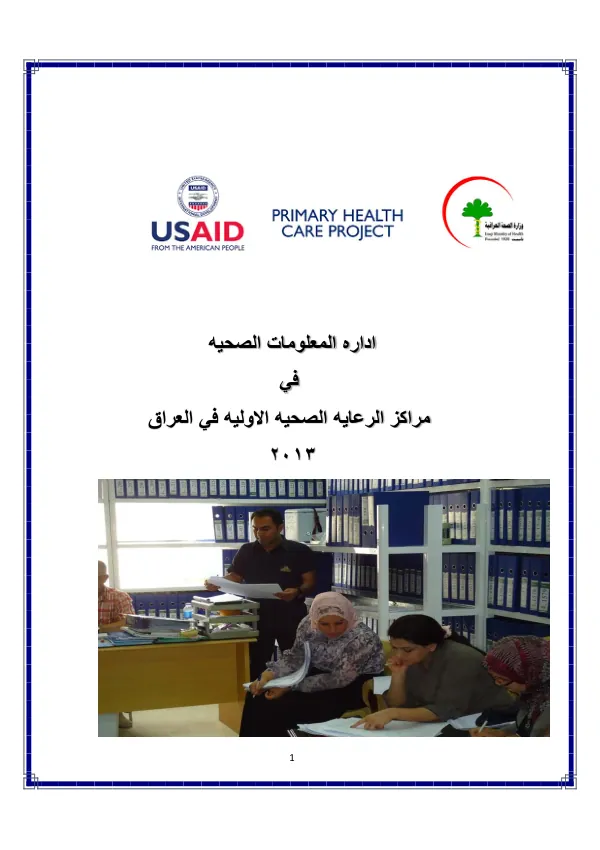
The primary health care initiative in Iraq began in 2013 with the support of the U.S.
120 pages
Sign in to readA free account is required to download.
Abstract
Agency for International Development (USAID) under the Primary Health Care Project in Iraq (PHCPI) implemented by University Research Co., LLC. The initiative aimed to improve the quality of primary health care services in Iraq. The document outlines the guidelines for the implementation of the initiative, which focuses on improving the quality of primary health care services in Iraq. The guidelines emphasize the importance of training health care providers in the use of evidence-based practices and the need for continuous quality improvement. The initiative involves the development of a training program for health care providers, which includes training in the use of clinical guidelines, patient assessment, and management of common health conditions. The program also includes training in the use of information technology to support the delivery of primary health care services. The guidelines emphasize the importance of collaboration between the Ministry of Health (MoH) and other stakeholders, including non-governmental organizations (NGOs) and international organizations, to support the implementation of the initiative. The guidelines also highlight the need for continuous monitoring and evaluation of the initiative to ensure its effectiveness and sustainability. The initiative focuses on improving the quality of primary health care services in Iraq, particularly in the areas of maternal and child health, infectious diseases, and non-communicable diseases. The guidelines emphasize the importance of addressing the social determinants of health, including poverty, education, and gender equality, to improve health outcomes. The document also outlines the roles and responsibilities of the various stakeholders involved in the initiative, including the MoH, NGOs, and international organizations. The guidelines emphasize the need for clear communication and coordination among the stakeholders to ensure the successful implementation of the initiative. The initiative involves the development of a quality improvement framework, which includes the use of clinical guidelines, patient assessment, and management of common health conditions. The framework also includes the use of information technology to support the delivery of primary health care services. The guidelines emphasize the importance of continuous quality improvement and the need for ongoing training and education for health care providers. The guidelines also highlight the need for continuous monitoring and evaluation of the initiative to ensure its effectiveness and sustainability. The document also outlines the importance of using evidence-based practices and the need for continuous quality improvement. The guidelines emphasize the importance of collaboration between the MoH and other stakeholders, including NGOs and international organizations, to support the implementation of the initiative. The guidelines emphasize the importance of continuous quality improvement and the need for ongoing training and education for health care providers. The guidelines also
Related documents