USAID DEC
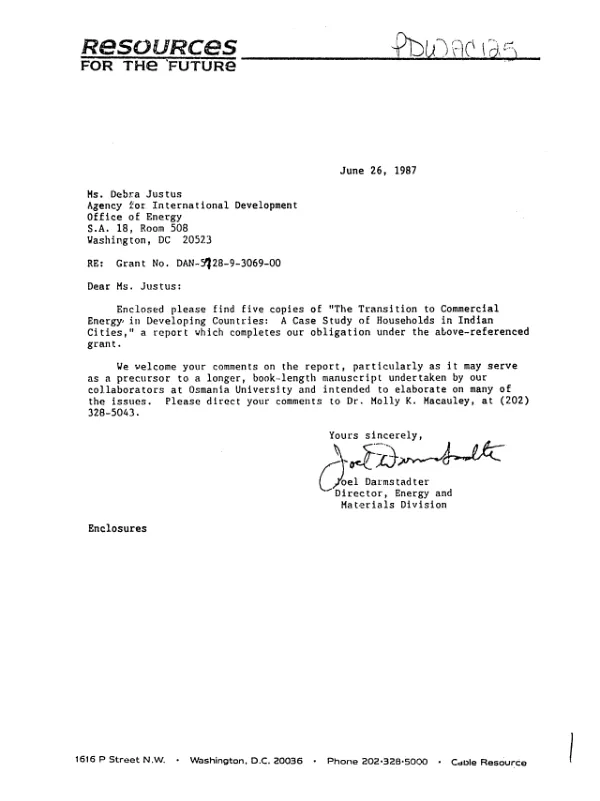
Transition to commercial energy in developing countries : a case study of households in Indian cities
Sign inRESOURCES FOR THE FUTURE, INC. (RFF)
Transition to commercial energy in developing countries : a case study of households in Indian cities
The transition in developing countries from traditional fuels (e.g., wood, charcoal) to commercial fuels (e.g., oil, natural gas) is one of the least understood and under-researched areas of energy analysis, yet figures prominently in major energy policy problems.
Macauley, Molly K. · 1987
Sign in to readA free account is required to download.
Abstract
This study, building on the work of an earlier energy survey performed in Hyderabad, documents fuel preferences for cooking in households of various income levels in Raipur, a city in the Indian state of Madhya Pradesh. The study concludes that: (1) mean monthly per capita consumption of energy for cooking in Raipur is close to reported estimates for households in other areas of India; (2) wood is the predominant cooking fuel for all households except for a small percentage of those with the highest incomes; (3) about 3% of the highest income households use liquified petroleum gas for about 40% of their cooking fuel needs; and (4) in households of all income levels certain kinds of traditional and commercial fuels are used jointly (e.g., kerosene and charcoal burned together in traditional stoves), indicating that commercial fuels, in theory substitute fuels, are in fact often complementary. Income elasticities for energy are about the same in Raipur as in Hyderabad - a 10% increase in income will result in a 5% increase in energy consumption - as is total energy consumption, although per capita energy expenditures are higher in Raipur, due mostly to higher wood prices. Includes references (1975-87), charts, appendices.