BANK FOR WEST AFRICAN DEVELOPMENT
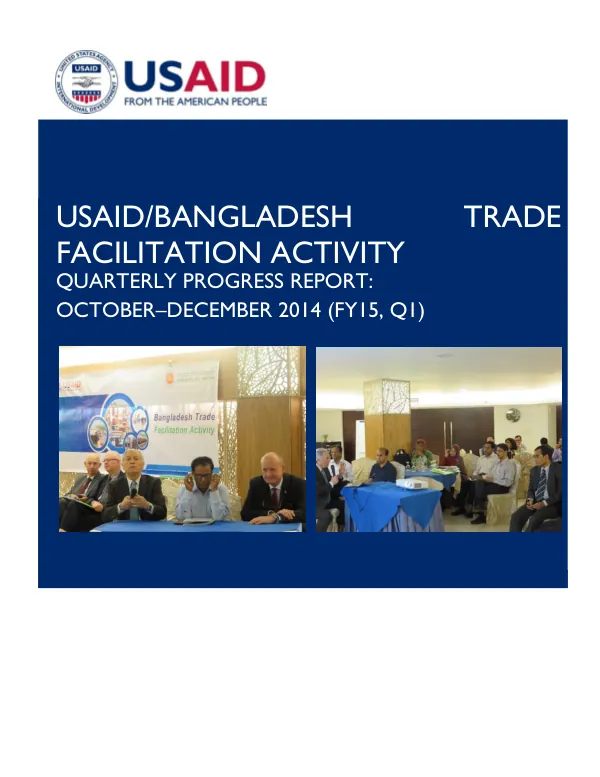
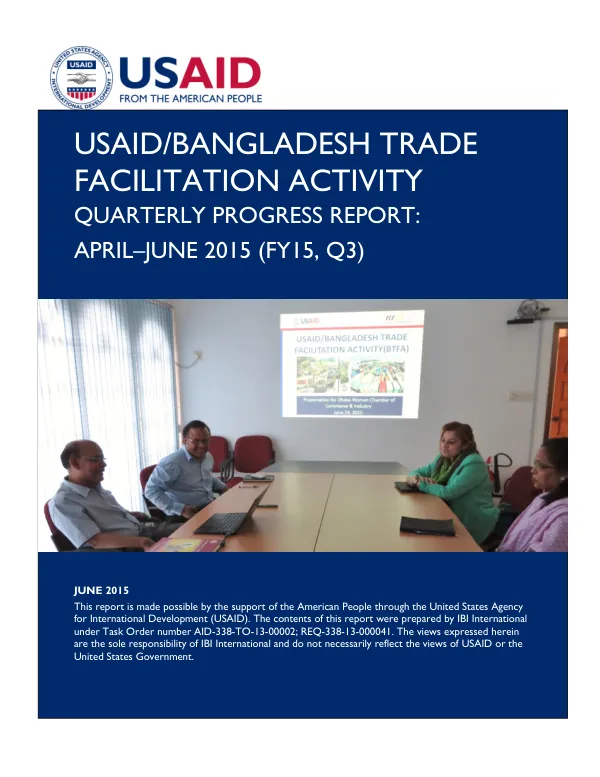
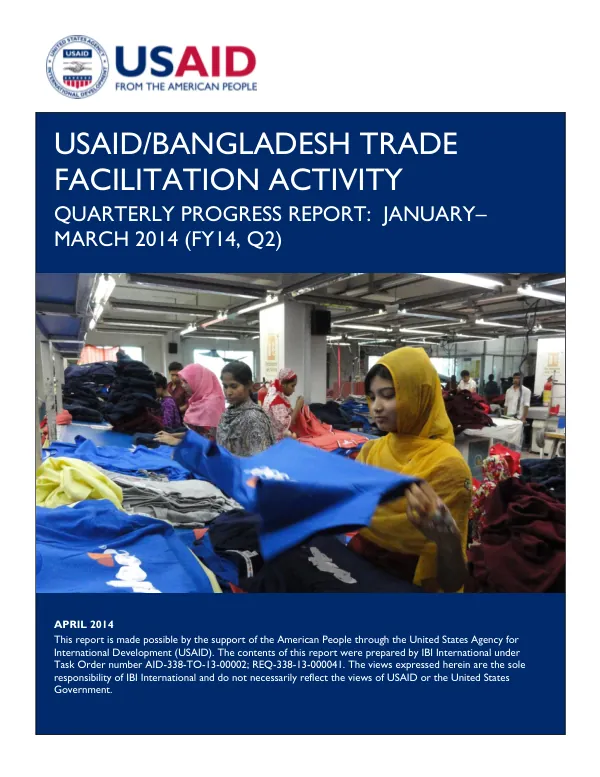
USAID/Bangladesh Trade Facilitation Activity: Quarterly Progress Report (FY14-Q2)
The Bangladesh Trade Facilitation Activity is a five-year program aimed at increasing the efficiency of cross-border trade in Bangladesh.
2014 · 28 pages
Sign in to readA free account is required to download.
Abstract
The program is funded by USAID Bangladesh and implemented by IBI International. The program's objective is to bolster economic growth by reducing the cost of exported goods and necessary imports. The program's design is based on the World Trade Organization's (WTO) Doha round and the December 2013 signing of the new WTO agreement in Bali. Trade facilitation has become a prominent topic in discussions and research, with data showing that improved efficiency of transactions can lead to significant advances in international trade. A recent study by the Organization of Economic Cooperation and Development found that the cost of inefficiencies in the trade of merchandise can reach as much as 15% of the transaction value. In Bangladesh, there is a broad acknowledgement that the country's trade competitiveness can only grow if the price of its exported goods and the cost of necessary imports are reduced. The program aims to address this issue by improving the efficiency of cross-border trade. The program's work plan, monitoring and evaluation plan, and gender plan have been completed, and an agreement has been reached with the National Board of Revenue (NBR) on the formation of working groups to address BTFA-specific reforms. These working groups will come together under the National Trade Facilitation Committee, which is chaired by the Member Customs Policy, the project's direct counterpart. The project has also established a bank account with the Commercial Bank of Ceylon, which was able to provide the necessary banking services despite restrictions initiated by the Central Bank of Bangladesh. The account is now fully operational, and the first local payroll has been completed. The project has kept in close contact with USAID through regular interaction with the project COR, Mr. M. T., who has been instrumental in advising on the complexities associated with Ministerial protocol and the operating environment in Bangladesh. The project has also maintained close contact with other donor organizations, including the Asian Development Bank (ADB) and the International Finance Corporation (IFC), which are working to improve trade facilitation in Bangladesh. The project's main emphasis during the quarter included contractual deliverables that shaped the framework of implementation efforts, including the Year 1 Workplan, the Monitoring and Evaluation Plan, the Gender Plan, and the Communication/Outreach Plan. The Year 1 Workplan also included the findings of the team's Bangladesh assessments, including the Trade Facilitation Analysis and Strategic Plan. The project has faced some challenges, including the establishment of a bank account and delays in acquiring the required permissions from the Economic Relations Division (ERD) of the Ministry of Finance (MOF). However, the project has continued to engage with its counterparts and has made progress in implementing its work plan. The project's progress has been marked by several key achievements, including the completion of the work plan, M&E plan, and gender plan, as well as the establishment of a bank account and the completion of the first local payroll. The project has also made progress in engaging with its counterparts and has established working groups to address BTFA-specific reforms. The project's next steps will include continuing to implement its work plan and engaging with its counterparts to address the challenges and issues that have arisen. The project will also continue to maintain close contact with USAID and other donor organizations to ensure that it is working in a collaborative and effective manner.