ADVANCED ENGINEERING ASSOCIATES INTERNATIONAL, INC. /SGGA
USAID Energy Policy Activity Annual Report 2019 - 2020
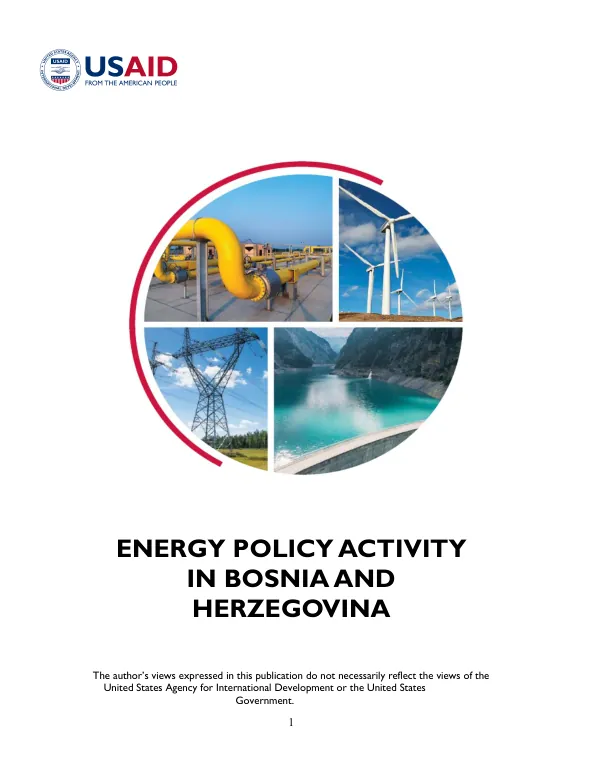
The Energy Policy Activity (EPA) in Bosnia and Herzegovina aimed to create an investor-friendly legislative framework in accordance with EnC Treaty obligations and EU Energy Directives.
2020 · 48 pages
Sign in to readA free account is required to download.
Abstract
The objectives were to achieve better coordination, management, and transparency at all levels of BiH's regulatory framework, a simplified energy policy environment, and targeted technical assistance to integrate BiH's energy sector into regional and EU markets. The EPA focused on three main components: the natural gas technical assistance, the electricity technical assistance, and the cross-cutting assistance on EU accession requirements in the BiH energy sector. The natural gas technical assistance aimed to create the preconditions for and development of a BiH natural gas internal market, and its integration into the regional natural gas market. This involved addressing the design and adoption of regulatory and policy reforms, including the unbundling of gas pipelines, open access regulation, and rules on licensing, tariffs, and customer switching. The electricity technical assistance component aimed to enhance the smart grid features of the electricity network by developing a demand side response mechanism, instituting intra-day and day-ahead markets, and assisting newly unbundled electricity utilities, renewable energy sources producers, and households and small commercial customers to benefit from a fully operational market. Additionally, the EPA continued the development of the Energy Efficiency Obligation (EEO) to make it fully functional. The cross-cutting assistance component provided communication support and assistance to the BiH Ministry of Foreign Trade and Economic Relations (MOFTER) and relevant entity ministries on project work that impacts compliance with the EnC requirements and obligations of BiH as a signatory of the Energy Treaty. The EPA also assisted the BiH regulatory commissions to promote and support a Europe-oriented, market-based energy sector by working with the National Association of Regulatory Utility Commissioners (NARUC) to develop an online platform to improve each commission's capacity, strategy, and tools to conduct public outreach campaigns and educate customers on the benefits of increased competition. During the reporting period, the EPA made significant progress in achieving its objectives. The initiative for the adoption of the State Level Law on Electricity and Natural Gas was renewed, and EPA organized a series of meetings with key stakeholders to present its proposed edits to the State Law. The adoption of the State Law is a crucial precondition for the implementation of EPA's activities on natural gas, and some related to electricity. The EPA also provided technical assistance in preparing a special law that would regulate the construction of the South Natural Gas Interconnection between BiH and the Republic of Croatia. The EPA conducted a detailed analysis and developed recommendations and edits to the draft Brcko District Electricity and Renewable Energy Sources Laws. The adoption of these Laws is instrumental to the organization of the electricity sector and increasing investments in the BD energy sector. Additionally, the EPA developed the Gap Analysis of the existing BiH legislative framework to identify the gaps for introduction of the virtual power plant concept. The Gap Analysis was discussed and approved by the respective Working Group and will serve as the starting point for the development of the Guidelines to enable renewable operators and producers to develop virtual renewable energy source power plants and participate in the balancing and wholesale market. The EPA also developed the Guidelines for Distribution System Operators to establish a Compliance Program and Appoint a Compliance Officer in accordance with Article 26 of Directive 2009/72. The EPA will now work with the DSOs on implementing the Guidelines. Overall, the EPA made significant progress in achieving its objectives and creating an investor-friendly legislative framework in accordance with EnC Treaty obligations and EU Energy Directives.
Related documents