BANK FOR WEST AFRICAN DEVELOPMENT
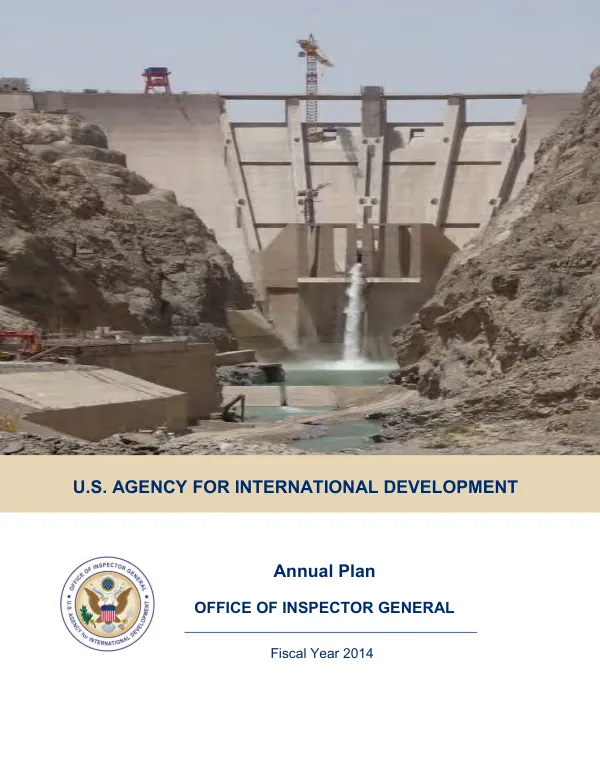
USAID OIG Fiscal Year 2014 Annual Plan
The Office of Inspector General (OIG) annual plan for Fiscal Year 2014 outlines the activities that OIG intends to perform in advancing its oversight agenda for the organizations under its purview.
2014 · 51 pages
Sign in to readA free account is required to download.
Abstract
These organizations include the United States Agency for International Development (USAID), the Millennium Challenge Corporation (MCC), the United States African Development Foundation (USADF), and the Inter-American Foundation (IAF). OIG also maintains limited oversight authority over the Overseas Private Investment Corporation (OPIC). OIG's mission is to provide independent oversight that promotes efficiency and effectiveness while safeguarding the integrity of programs and operations under USAID OIG's jurisdiction. The Inspector General Act of 1978, as amended, authorizes the Inspector General to conduct and supervise audits and investigations. USAID OIG was established on December 16, 1980, by amendment to the Foreign Assistance Act of 1961. The annual plan is based on several criteria, including goals and objectives identified in the strategic plan, significance to stakeholders' ability to promote efficient and effective delivery of foreign assistance, cost-benefit in dollars or other resources, results of formal risk assessments of the organizations under OIG's oversight, congressional mandates, stakeholder interests, new or changing conditions affecting a program or function, and availability of resources and expertise. OIG has made it a priority to expand its use of formal risk assessments to help plan future reviews and audits. To develop the audits and reviews for FY 2014, OIG developed criteria for risk analyses that considered risk factors in a consistent manner across all of USAID's country programs. OIG reviewed these risk factors globally, allowing necessary customization by the respective regional offices. Based on OIG's risk assessments, FY 2014 priorities include reviews and audits of direct government assistance, USAID's procurement reform and contracting processes, democracy and governance programs, economic and infrastructure programs, and health programs. For instance, the audit plan for Iraq focuses on the mission's efforts in democracy and governance and economic growth. As countries in the Middle East attempt to launch historic transitions to democracy, OIG will evaluate USAID's response to developments following the Arab Spring in select countries. The Office of Investigations has investigative responsibilities that extend over billions of dollars in foreign assistance and has staff deployed around the world. Since FY 2008, OIG's investigations have resulted in combined savings and recoveries of nearly $400 million. Its priorities include resolving allegations of criminal activity, operating country-specific hotlines in high-risk environments, educating stakeholders and publicizing investigative outcomes to detect and deter fraud, and expanding investigators' presence overseas. To support OIG's mission-critical activities, OIG is planning to leverage information technology to streamline processes, improve communications with stakeholders through the use of social media, implement mobile solutions to improve efficiency and effectiveness within the organization, and involve employees in addressing critical issues that affect OIG's morale and efficiency. This annual plan is an evolving document that will be updated as necessary to ensure that OIG's work remains relevant, timely, and responsive to the priorities of its stakeholders.
Related documents
Documents in this collection
 2014
2014USAID DEC
Oversight of Small Agencies - Testimony of Michael Carroll, USAID Acting Inspector General, Before the Subcommittee on Financial and Contracting Oversight of the Senate Committee on Homeland Security and Governmental Affairs
Open record 2015
2015USAID DEC