USAID DEC
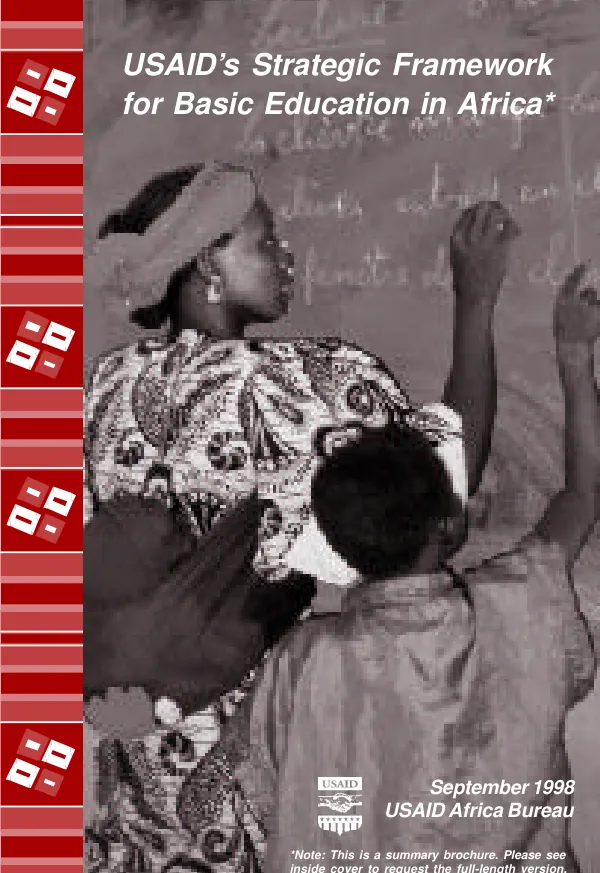
USAID"s strategic framework for basic education in Africa = Cadre strategique de l"USAID pour l"education de base en Afrique
Sign inUSAID. BUR. FOR AFRICA
USAID"s strategic framework for basic education in Africa = Cadre strategique de l"USAID pour l"education de base en Afrique
How will USAID support the critical needs for expanding and improving basic education in Africa over the next decade?
1998
Sign in to readA free account is required to download.
Abstract
This booklet summarizes USAID"s updated strategic framework for the sector. In contrast to earlier forms of assistance, which provided external expertise to diagnose and correct specific weaknesses, the Agency"s new approach targets reform of the education system itself, strategically targeting efforts in tandem with each country"s policies, plans, and capacities, and emphasizing their ability to contribute to effective schools and promote systemic reform, and long-term program and reform sustainability. Ways in which USAID can pursue each of these objectives are outlined, along with three criteria USAID will use in selecting African countries for basic education assistance: USAID country presence; the magnitude of the need for basic education; and readiness for education reform. Implications for USAID operations are described in terms of strategic planning and results frameworks, measuring results, performance, donor coordination, project and nonproject assistance modalities, and staffing. A final section outlines challenges and evolving issues. On the one hand, there are still a very large number of African children out of school, while on the other there exist major problems of ineffective schools and weak institutional support for reform. USAID and other sources of external financing are under increased pressure to demonstrate results, while the resources to do this are shrinking. The central challenge is to support country capacity and initiatives to develop realistic and creative ways to better mobilize internal resources and local capacity to provide quality basic education for children.