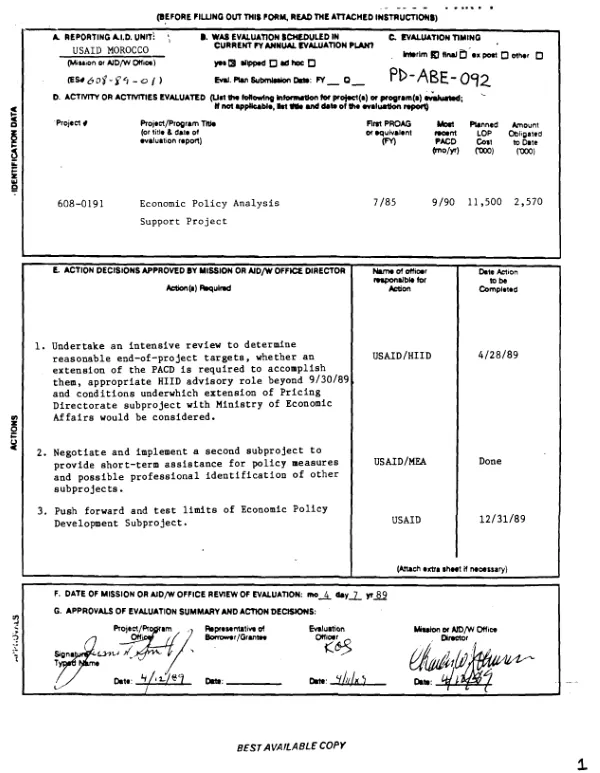
USAID. MISSION TO MOROCCO
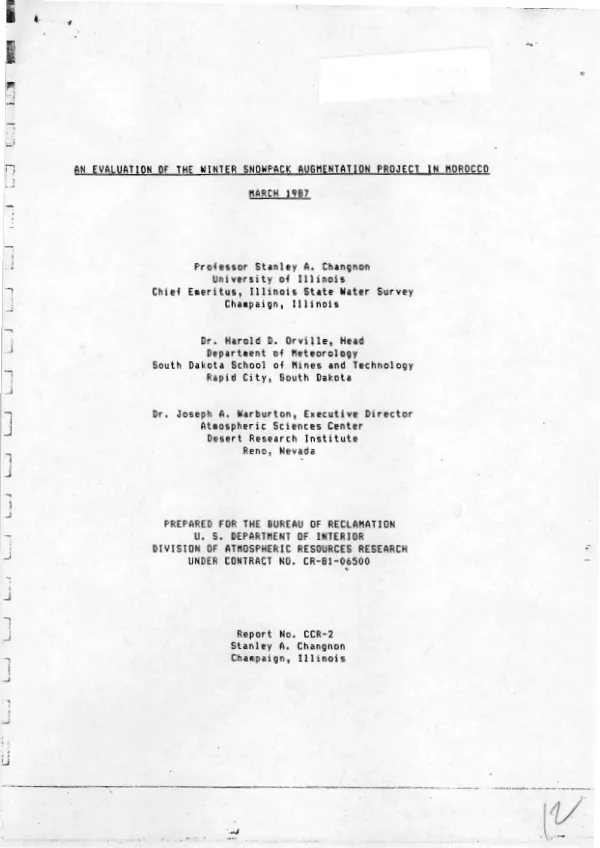
Winter snowpack augmentation
Summarizes attached external evaluation (XD-CAZ-142-A) of a project to develop Morocco"s capabilities to design and use scientifically based weather modification programs for improving water supplies during periods of dorught.
1988
Sign in to readA free account is required to download.
Abstract
The evaluation covered the period 4/85-3/87. Many key recommendations from a 1985 external review have been adopted. Project monitoring by USAID/M and scientific TA from the U.S. Bureau of Reclamation have been generally of high quality and have led measurable progress in the project. All U.S. equipment has been delivered and much of it is installed. Certain achievements are very impressive. Training has been extensive and is on schedule, and impressive technology transfer is occurring. The current development of a cloud physics aircraft capability will provide extremely valuable data to help interpret seeding effects. In addition, considerable synoptic weather, satellite, radar, precipitation, and streamflow data exist and are rapidly being entered into computer formats. Moroccan efforts to develop, operate, and manage the project have been substantial. There are now five functioning operational centers including the forecasting-coordination center in Casablanca, the radar and operational center in Khouribga, the rawinsonde center at Beni Mellal, the mountain center at Azilal, and the aircraft headquarters at Kenitra. The staff exceeds 100 scientists, engineers, pilots, and technicians. The project has made a beneficial national impact through a national steering committee, growing interagency relations and support, and a general improvement of the national weather service. There are some areas of concern, however. Only 7 of 10 targeted ground-generators have been installed, and many other items are not installed (e.g., snow courses, mountain weather stations, rain gauges). Operations are also hampered by radar problems due to the lack of radome, continuing aircraft problems, inadequate communications among the operating centers, and occasional absence of staff for training sessions. Also, planning and initiation of physical evaluation studies have been late, and certain key studies (e.g., airflow and supercooled liquid water measurements) are incomplete or lacking. Recommendations as the project enters its final year are, inter alia, to: (1) establish Khouribga as the operations center for conducting all project-specific forecasting, nowcasting, and coordination of operations; (2) establish high-performance radio communications between the ground generator network and Khouribga; (3) complete equipment installation, launch project studies, and increase hands-on management; and (4) initiate indepth planning for the post-project period. (Author abstract, modified)
Related documents