USAID. MISSION TO ZIMBABWE
Zimbabwe private sector housing : technical assistance support project
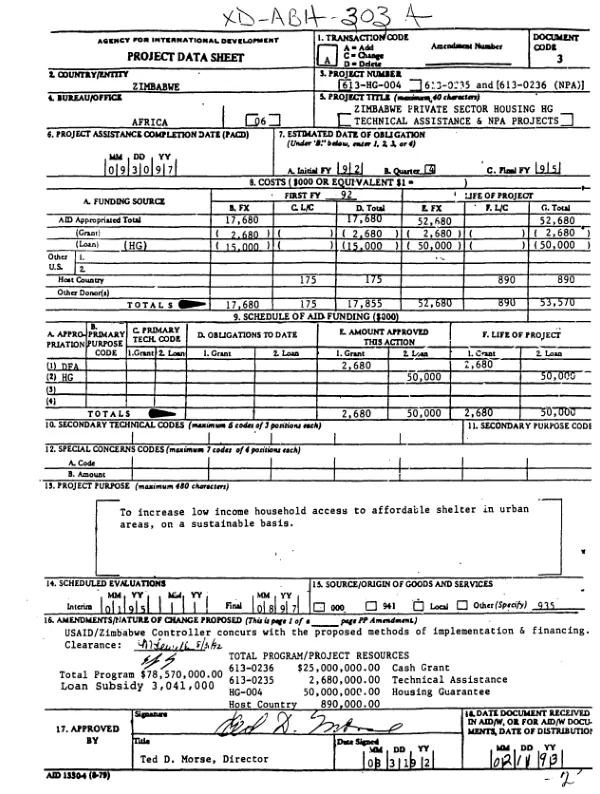
Project to finance TA, training, and studies in support of the Private Sector Housing Program (6130236), aimed at increasing the sustainable provision of low-income housing, especially by the private sector, in urban areas of Zimbabwe.
1992
Sign in to readA free account is required to download.
Abstract
The project will support policy reforms in the construction and building materials industry, the housing finance sector, and the land delivery system. TA and training for the construction and building materials industry will focus on helping small indigenous contractors, including those typically employed on individual house building contracts, become competitive, and on increasing employment in the sector, particularly for semi-skilled and unskilled workers. In addition, the project will finance agreements with indigenous and U.S. NGOs to support technology transfer and information exchanges that will expose small enterprises to appropriate technologies for manufacturing building materials. Studies, workshops, and seminars will also be funded to expose Government officials, architectural and engineering consultants, and building and civil engineering contractors to the advantages of labor-intensive construction methods and to establish frameworks for the use of new technologies. This effort, aimed at expanding semi-skilled and unskilled employment, will include comprehensive studies of construction practices in Zimbabwe and comparable economies. The most critical part of this project will be support for housing finance reform. Efforts will include: (1) an indepth analysis of the private financial sector (comprising institutions and the regulatory environment), and possibly including a follow-on study of ways to liberalize the system; (2) TA and training for building societies in portfolio management; (3) analyses of new financing mechanisms, including secondary mortgage markets, municipal bond systems, private sector financing of high-density housing construction, and the feasibility of privatizing the National Housing Fund; and (4) specialized TA and training to help middle managers in the building societies and GOZ supervisors understand the needs of low-income residents, especially women. Support for reform of the land delivery system, aimed at lowering the cost of housing, will include TA to help local authorities prepare long-term statutory master plans and medium-term strategic land use and infrastructure delivery plans. This TA and training will be carefully targeted to each local authority and might include local workshops in aerial photography, land use development, and zoning regulations, as well as U.S. training for senior officials. Other activities will include: a review of the land survey process, aimed at reducing the amount of time required to secure a land title; workshops to review proposed reductions in standards for minimum housing and related infrastructure, resulting in a new official design manual on the subject; a study of the feasibility of decreasing the costs of high-rise developments, with particular attention to engineering and infrastructure standards; and strengthening of Zimbabwe"s housing cooperative movement. See also the abstract of 6130236.
![Housing finance system expansion program [: project paper supplement]](https://covers.devme.ai/gen/27045.webp)