USAID DEC
Zinc deficiency in rice; a review of research at the international rice research institute
Sign inINTERNATIONAL RICE RESEARCH INSTITUTE (IRRI)
Zinc deficiency in rice; a review of research at the international rice research institute
Next to nitrogen and phosphorus deficiencies, zinc deficiency is now the most important nutritional factor limiting the growth of wetland rice.
Castro, R. U. · 1970
Sign in to readA free account is required to download.
Abstract
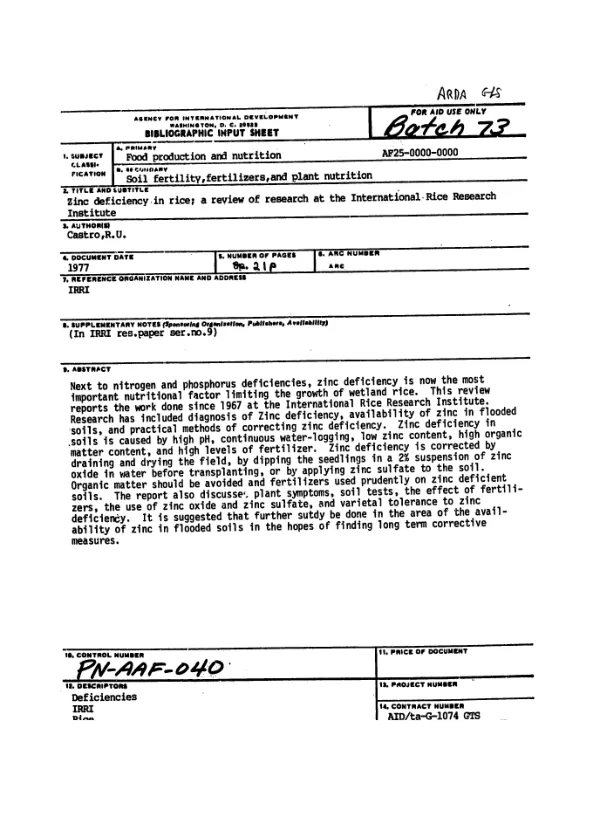
This review reports the work done since 1967 at the International Rice Research Institute. Research has included diagnosis of zinc deficiency, availability of zinc in flooded soils, and practical methods of correcting zinc deficiency. Zinc deficiency in soils is caused by high pH, continuous water-logging, low zinc content, high organic matter content, and high levels of fertilizer. Zinc deficiency is corrected by draining and drying the field, by dipping the seedlings in a 2% suspension of zinc oxide in water before transplanting, or by applying zinc sulfate to the soil. Organic matter should be avoided and fertilizers used prudently on zinc deficient soils. The report also discusses plant symptoms, soil tests, the effect of fertilizers, the use of zinc oxide and zinc sulfate, and varietal tolerance to zinc deficiency. It is suggested that further study be done on the availability of zinc in flooded soils in order to find long-term corrective measures.
Connected topics
Related documents