Global Waters
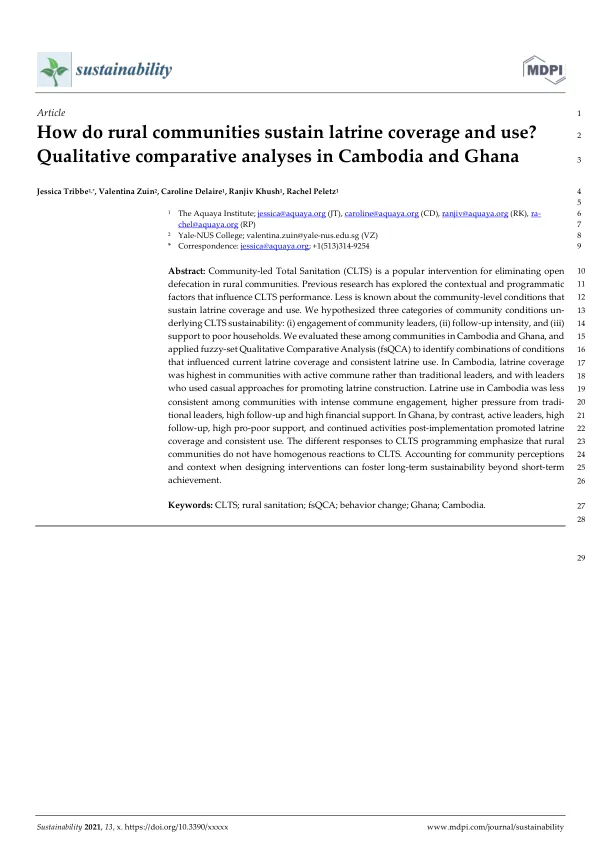
How do rural communities sustain latrine coverage and use? Qualitative comparative analyses in Cambodia and Ghana
Sign inGLOBAL WATERS
How do rural communities sustain latrine coverage and use? Qualitative comparative analyses in Cambodia and Ghana
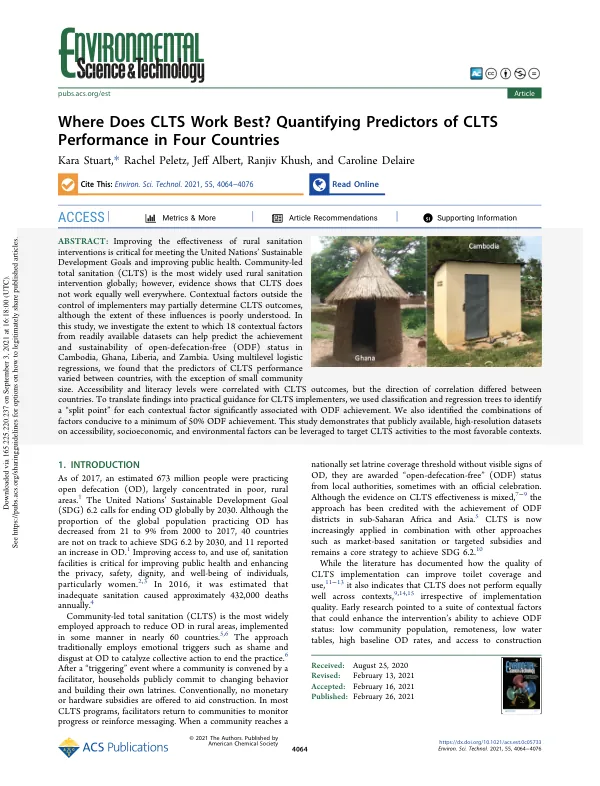
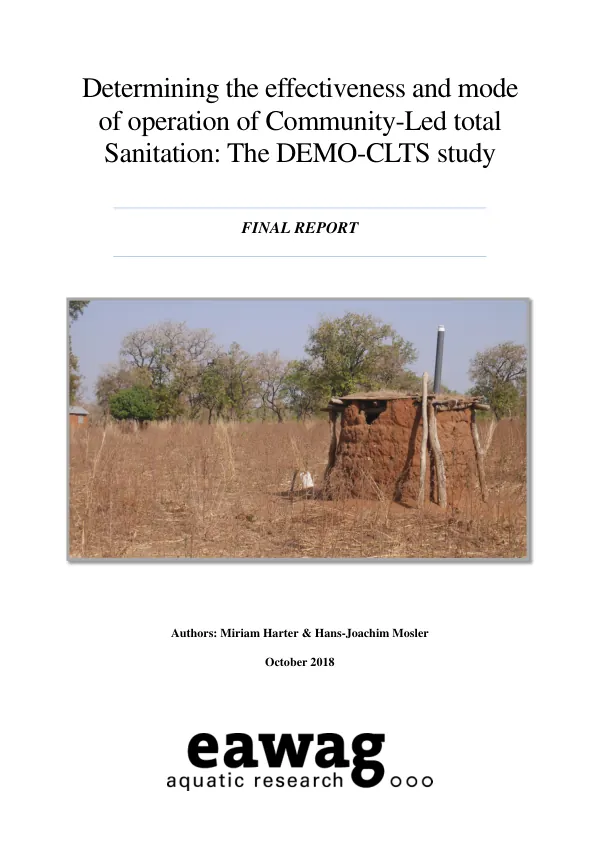
Community-led Total Sanitation (CLTS) is a popular intervention for eliminating open defecation in rural communities.
2021
Sign in to readA free account is required to download.
Abstract
Previous research has explored the contextual and programmatic actors that influence CLTS performance. Less is known about the community-level conditions that sustain latrine coverage and use. The Water, Sanitation and Hygiene Partnerships and Learning for Sustainability Project (USAID/WASHPaLS) hypothesized three categories of community conditions underlying CLTS sustainability: (i) engagement of community leaders, (ii) follow-up intensity, and (iii) support to poor households. WASHPaLS evaluated these among communities in Cambodia and Ghana, and applied fuzzy-set Qualitative Comparative Analysis to identify combinations of conditions that influenced current latrine coverage and consistent latrine use. This resulting paper summarizes the qualitative research. For more information, please find the WASHPaLS literature review on CLTS.
Connected topics