USAID
0LQLVWMCZ
The Wolof language is a member of the Senegambian branch of the Niger-Congo language family.
2018 · 44 pages
Sign in to readA free account is required to download.
Abstract
It is spoken by approximately 6 million people in Senegal and The Gambia. The language is written using the Latin alphabet, with additional letters and diacritical marks to represent unique sounds. The text appears to be a collection of Wolof folktales, with each story featuring a different character or group of characters. The stories are presented in a series of numbered sections, with each section consisting of a brief narrative. The stories often feature animals, supernatural beings, and human characters, and they frequently involve themes of morality, wisdom, and the consequences of one's actions. One of the recurring characters in the stories is a figure known as Cuuj, who is often depicted as a wise and knowledgeable individual. Cuuj is frequently consulted by other characters for advice and guidance, and he is shown to possess a deep understanding of the natural world and the workings of the universe. In one story, Cuuj is asked for his opinion on a matter of great importance, and he responds with a wise and insightful comment that helps to resolve the issue. Another character who appears in several of the stories is a figure known as Yaay Nag, who is depicted as a powerful and wise woman. Yaay Nag is often shown to possess supernatural abilities, and she is frequently called upon to help resolve conflicts and disputes. In one story, Yaay Nag is asked to intervene in a dispute between two groups of people, and she responds by using her powers to bring about a peaceful resolution. The stories also feature a number of other characters, including animals and supernatural beings. One story features a character known as Mbaam, who is depicted as a wise and knowledgeable individual. Mbaam is shown to possess a deep understanding of the natural world, and he is frequently consulted by other characters for advice and guidance. Throughout the stories, there are recurring themes and motifs that add depth and complexity to the narratives. One of the most common themes is the importance of wisdom, knowledge, and understanding. The stories often feature characters who are seeking wisdom and guidance, and they frequently involve themes of morality and the consequences of one's actions. The language and style of the stories are also noteworthy. The Wolof language is known for its rich and expressive vocabulary, and the stories feature a wide range of words and phrases that are unique to the language. The stories are also written in a style that is characteristic of Wolof folklore, with a focus on oral tradition and the use of proverbs and sayings to convey moral lessons and wisdom. Overall, the Wolof folktales presented in this text offer a unique glimpse into the culture and traditions of the Wolof people. The stories are rich in wisdom, knowledge, and insight, and they provide a valuable resource for anyone interested in learning more about the language and culture of Senegal and The Gambia.
Related documents
Documents in this collection
 2016
2016USAID DEC
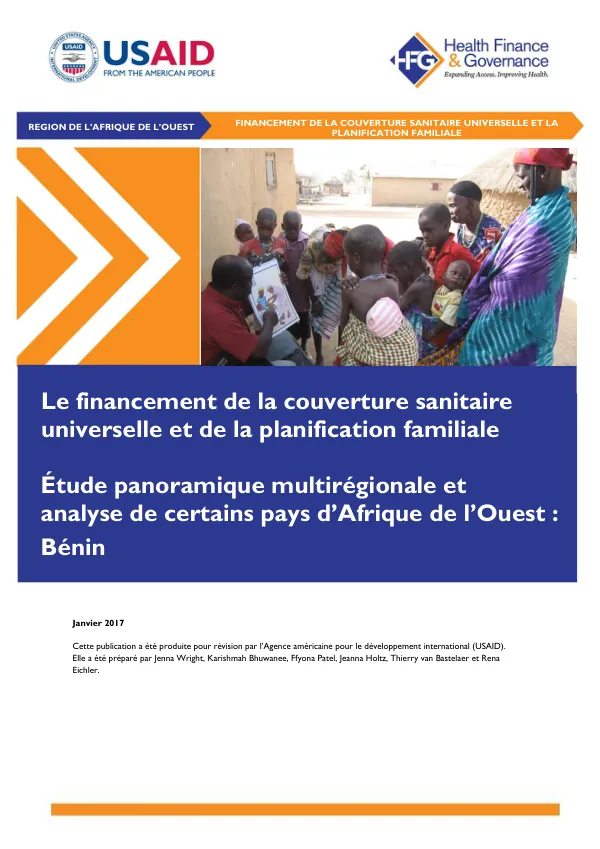
Financing of Universal Health Coverage and Family Planning: A Multi-Regional Landscape Study and Detailed Analysis of Select West African Countries
Open record 2016
2016USAID DEC