MERCY CORPS INTERNATIONAL
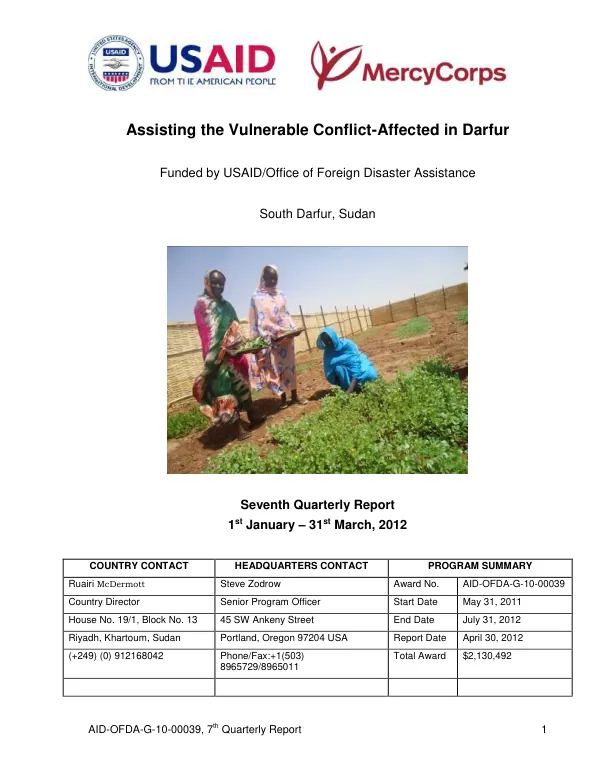
8th Quarterly Report: Assisting the Vulnerable Conflict-Affected in Darfur
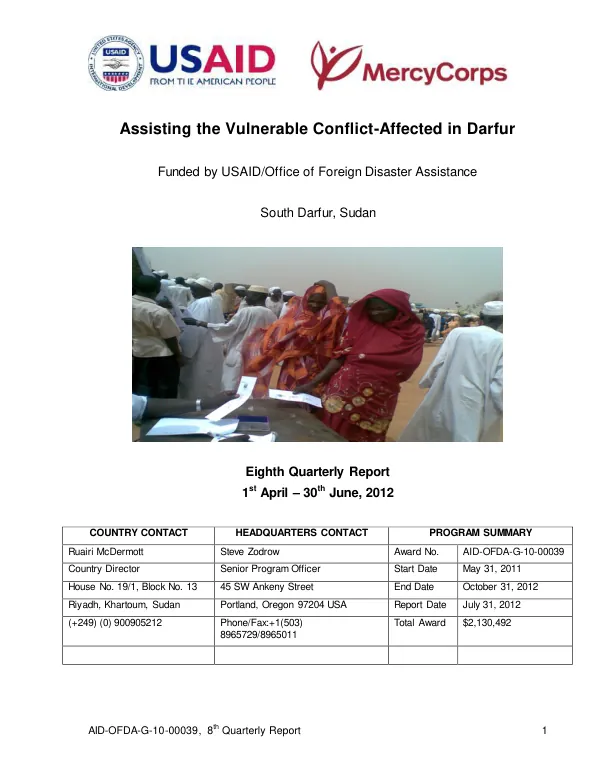
The agricultural development initiative in South Darfur, Sudan, is a USAID-funded program aimed at assisting conflict-affected populations.
2012 · 15 pages
Sign in to readA free account is required to download.
Abstract
The program is implemented by Mercy Corps Scotland (MCS) in three IDP camps (Dereige, Sakaly, and Elsereif) and the Abga Rajel rural area. The program's main objective is to improve access to safe drinking water, sanitation facilities, and hygiene practices, as well as promote economic recovery and market systems. Security in the region remains unpredictable, with sporadic fighting and new civilian displacement reported in some areas. Despite this, humanitarian organizations, including MCS, continue to have access to the majority of people requiring assistance in Darfur. However, they face constraints such as government restrictions, insecurity, bureaucratic impediments, poor infrastructure, and self-imposed UN security procedures. MCS has continued implementing Water Sanitation and Hygiene (WASH), Agriculture and Food Security (AFS), and Economic Recovery and Market System (ERMS) activities in the project areas. The WASH program has supported the operation and maintenance of seven motorized water systems, providing approximately 506 cubic meters of safe drinking water per day to 50,178 IDPs. Water quality analysis revealed that 89% of water samples collected from water points were not contaminated with E. coli, while 65% of samples collected from water collection container jerry cans were free from E. coli. In terms of sanitation, MCS is a lead agency for new construction, rehabilitation, and replacement of household latrines in the three camps and the Abga Rajel area. The program has supported vulnerable families with bathing facilities and constructed permanent latrines in schools to promote improved sanitation practices among pupils. Volunteer hygiene promoters have sensitized households through the dissemination of hygiene messages to promote appropriate use and cleaning of latrines. Hygiene promotion activities have focused on raising awareness of risky water, sanitation, and hygiene practices by providing information and distributing hygiene materials that promote behavior change to reduce the spread of water-related diseases. The trained hygiene promoters have sensitized IDPs in the community, particularly vulnerable groups, through various hygiene activities such as home-to-home visits, distribution of Information Education Communication (IEC) materials, public hygiene promotion campaigns, and jerry can cleaning exercises. In the Agriculture and Food Security sector, MCS has continued implementing activities to improve access to agriculture and food security outputs for conflict-affected populations in South Darfur. The main activities implemented during the quarter included conducting a seed survey and organizing seed fairs to distribute seed for the planting season. Training of farmers on various agriculture topics continued, together with the running of demonstration gardens. The seed survey provided key information on beneficiaries' seed preferences and quantities needed, revealing that the main crops cultivated in the area are millet, sorghum, groundnuts, okra, cucumber, watermelon, karkade, cowpeas, sesame, sweet sorghum, maize, and local soybeans (Abun Gawi).