DEVELOPMENT ASSOCIATES, INC.
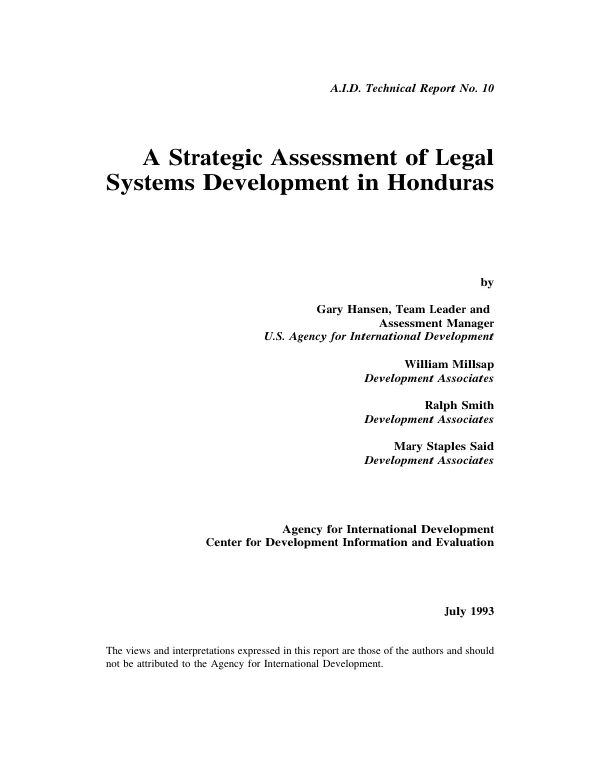
A strategic assessment of legal systems development in Honduras
Because Honduras possesses classic political and socioeconomic characteristics of early developing countries, A.I.D.'s experience there with judicial reform through its Administration of Justice (AOJ) program holds particular relevance for replication.
Hansen, Gary E.|Millsap, William · 1993
Sign in to readA free account is required to download.
Abstract
This report reviews the program's origins, impacts to date, management, and overall strategy, and presents the following lessons learned. (1) Merit-based rather than patronage-based career service is a major tenet of judicial reform in the region. However, because such reform regularly faces opposition, alternative strategies to ensure professional judicial appointments and performance should be considered in some countries. (2) The sustainability of judicial reform depends on support from political coalitions, both inside and outside the judicial system. (3) The creation and maintenance of such coalitions requires a high level of TA best delivered by a staff endowed with the experience, stature, and diplomatic skill needed to work with elite members of the judiciary. (4) Special focus should be given to developing strategies that will spread the benefits of the law to larger segments of the population. (5) Given Honduras' political volatility, diversified investments in both the judiciary and the NGO sector may increase the sustainability of judicial reform. (6) Because legal development programs are politically sensitive, USAID Missions should exercise tight control over the provision of TA. (7) The Honduran AOJ program demonstrates the feasibility of donor-host country cooperation in addressing politically sensitive issues. The assessment concludes that the program is reaching a critical threshold at which the good faith and commitment of the Government of Honduras will have to be fully evident if reforms are to proceed.