JOHN SNOW, INC. (JSI)
Acceptability of immunization
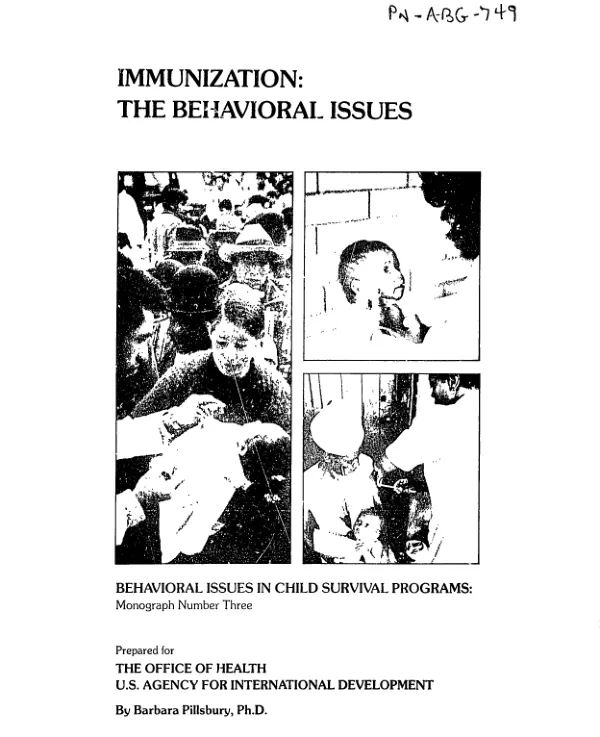
This paper examines the work of the Resources for Child Health (REACH) project in assisting immunization programs to analyze and overcome behavior-related constraints to utilization of immunization services - what is commonly referred to as acceptability of immunization.
Favin, Michael · 1991
Sign in to readA free account is required to download.
Abstract
In this area, REACH collaborated actively with the national Expanded Programs on Immunization (EPIs) in Bangladesh, Haiti, Kenya, and Indonesia. REACH staff and consultants have undertaken the following types of activities aimed at improving the acceptability of immunization services: anthropological and market research, strategy formulation, social mobilization, and channeling (following up and referring eligible infants). Among the important lessons REACH has learned are the following: (1) Excellent communication work alone cannot sustain immunization service utilization. Efforts to increase public demand for immunization should form part of a coordinated strategy to improve coverage that also addresses service availability and quality. (2) Major determinants of acceptability in general appear to be parents" trust in health workers, convenience of services, the congeniality of providers, influence of local leaders, fear of side effects, and parents" understanding of when and where to bring their children. Investigations in specific locations are needed to learn the local barriers to utilization of services. (3) Many mothers are willing to have their children immunized even though they know little about how immunization works. (4) Research on acceptability should be as simple and practically oriented as possible. It should be planned and implemented with maximum participation of the Expanded Program on Immunization (EPI) staff. It should reveal positive motivations as well as barriers to acceptance. (5) More care is needed in message design. Good messages provide the essential logistical information, combat attitudinal resistances, and employ effective motivations. (6) To supplement general awareness messages, specific messages should be designed for specific groups, defined according to their immunization utilization status. In some places, messages should be targeted at men. (7) Messages should emphasize finishing immunization, not merely starting. (8) Health workers" actions are a major determinant of whether parents or guardians of infants return with them for the full series of immunizations. Health workers not only play technical roles but also essential communication roles in transmitting crucial information and motivating return visits. Health workers need training, support, and incentives to carry out their roles well. (Author abstract)
![Urban EPI [expanded program on immunization]](https://covers.devme.ai/gen/33624.webp)
![Research and training for an immunization IEC [information, education and communication] campaign in Kyrgyzstan -- November 8-December 4, 1994](https://covers.devme.ai/gen/28009.webp)