INTERNATIONAL HEALTH AND DEVELOPMENT ASSOCIATES
Immunization : the behavioral issues
Of all the child survival interventions, immunization has generally had the greatest success to date.
Pillsbury, Barbara L. K. · 1990
Sign in to readA free account is required to download.
Abstract
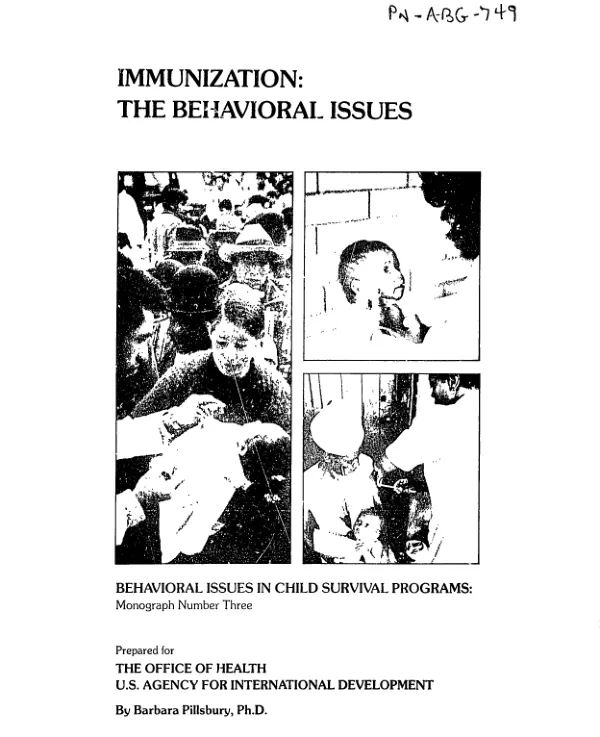
In fact, 60% of children worldwide are now fully vaccinated by their first birthday, up from 15-20% in the early 1980"s. However, as health planners think about extending and sustaining the gains made thus far, attention needs to focus on understanding and influencing the behavior of community members whose children have not yet been fully immunized. Every year about 3.5 million children in developing countries die and many more are disabled from vaccine preventable diseases. Even when vaccination services are accessible and even free, many mothers and child caretakers do not respond. This monograph, the third in a series on behavioral issues of child survival interventions, presents a synthesis and analysis of program experience and research findings concerning behavioral issues of immunization. Major findings and recommendations concern: the importance of understanding behavioral factors; reasons children are not immunized; disease-specific beliefs and behavior; socioeconomic correlates of low immunization coverage; parental knowledge and understanding of immunization and fears concerning it; low motivation for immunization; mothers" time costs and other constraints; location of services; drop outs; vaccination cards; community participation; traditional health practitioners; traditional health beliefs; research methodologies and health education approaches; and counseling guidelines. (Author abstract, modified)
Related documents