USAID DEC
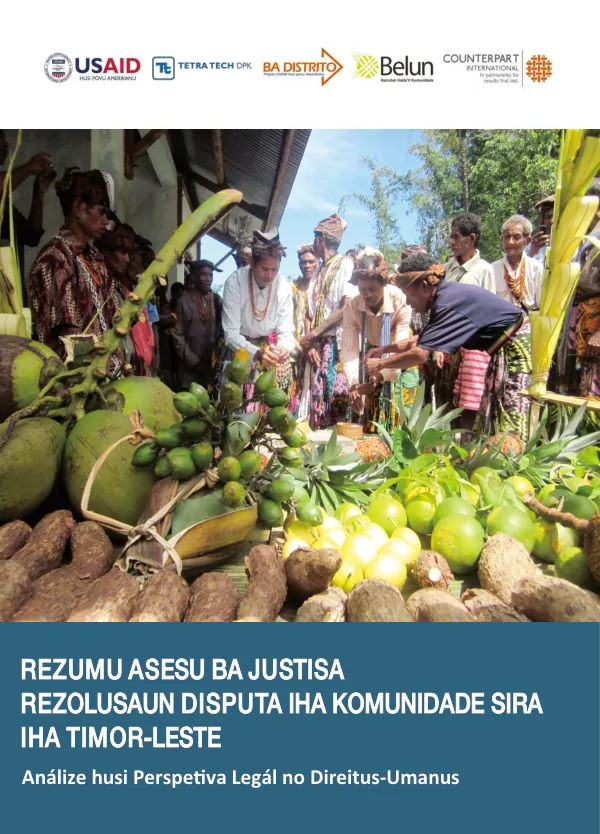
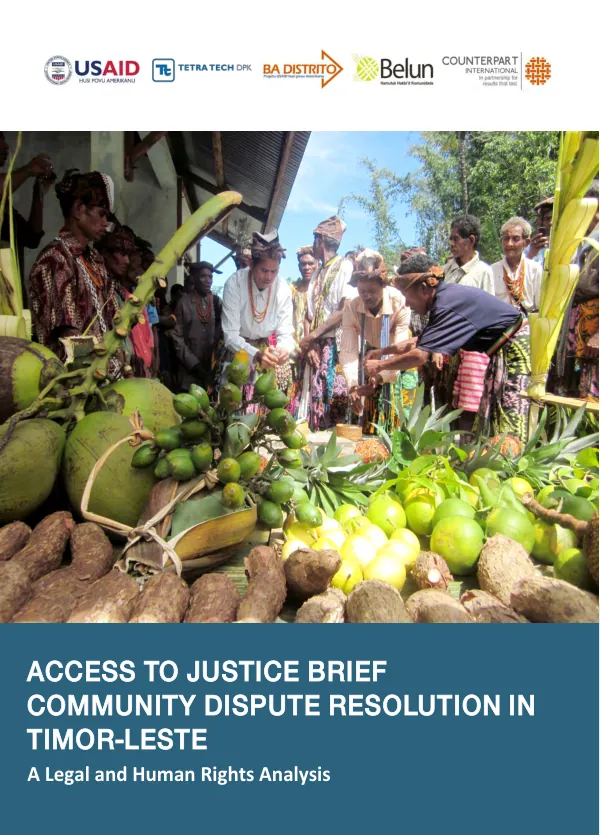
Access to Justice Brief: Community Dispute Resolution in Timor-Leste: A Legal and Human Rights Analysis
Sign inBELUN
Access to Justice Brief: Community Dispute Resolution in Timor-Leste: A Legal and Human Rights Analysis
Community dispute resolution mechanisms in Timor-Leste are a crucial aspect of the country's informal justice system.
32 pages
Sign in to readA free account is required to download.
Abstract
These mechanisms are used to resolve disputes at the community level, often involving traditional leaders and customary law. The types of matters dealt with by community-based informal mechanisms include family disputes, land disputes, and petty crimes. There are numerous community-based procedures in place, with each suku (the second smallest administrative unit in Timor-Leste) having its own set of procedures. The procedures followed in community-based informal justice mechanisms vary from one suku to another, but often involve mediation, arbitration, and reconciliation. Community leaders, known as lia nain, play a key role in these procedures, using their knowledge of customary law and traditional practices to resolve disputes. The views on informal and formal justice in Timor-Leste are complex, with some communities preferring to use informal mechanisms to resolve disputes, while others prefer to use the formal justice system. The current legal framework for the informal justice sector in Timor-Leste is based on the country's Constitution, which recognizes the importance of customary law and traditional practices. The Laws concerning community leadership also provide a framework for the role of community leaders in informal justice mechanisms. However, the Criminal Procedure Code (CPC) has raised concerns regarding the implementation of local regulations, as it has been criticized for being too rigid and not taking into account the nuances of customary law. Human rights issues arising from the informal justice sector in Timor-Leste include concerns regarding the role of the state in regulating community dispute resolution mechanisms. The state has a responsibility to ensure that these mechanisms are fair, transparent, and do not infringe on human rights. However, the state's role in regulating these mechanisms is often limited, and community leaders may have significant autonomy in resolving disputes. The human rights implications of community dispute resolution mechanisms in Timor-Leste are complex and multifaceted. On the one hand, these mechanisms can provide an important outlet for communities to resolve disputes in a way that is consistent with their cultural and traditional practices. On the other hand, these mechanisms can also be used to perpetuate inequality and discrimination, particularly against women and marginalized groups. Options and proposals for regulating informal justice mechanisms in Timor-Leste include legislative proposals to establish a framework for the regulation of these mechanisms. The UNTAET-era experiences in utilizing the informal justice system have shown that a more formalized approach can be effective in promoting access to justice and reducing conflict. However, any regulatory framework must take into account the complexities of customary law and traditional practices in Timor-Leste. Recommendations for regulating informal justice mechanisms in Timor-Leste include community education and awareness-raising programs to promote understanding of the importance of human rights and the role of the state in regulating community dispute resolution mechanisms. Legislative changes are also necessary to provide a clear framework for the regulation of these mechanisms. Other measures, such as the establishment of a national human rights commission, can also help to promote access to justice and reduce conflict in Timor-Leste.
Related documents