U.S. PUBLIC HEALTH SERVICE. CENTERS FOR DISEASE CONTROL AND PREVENTION (CDC). INTERNATIONAL HEALTH PROGRAM OFC.
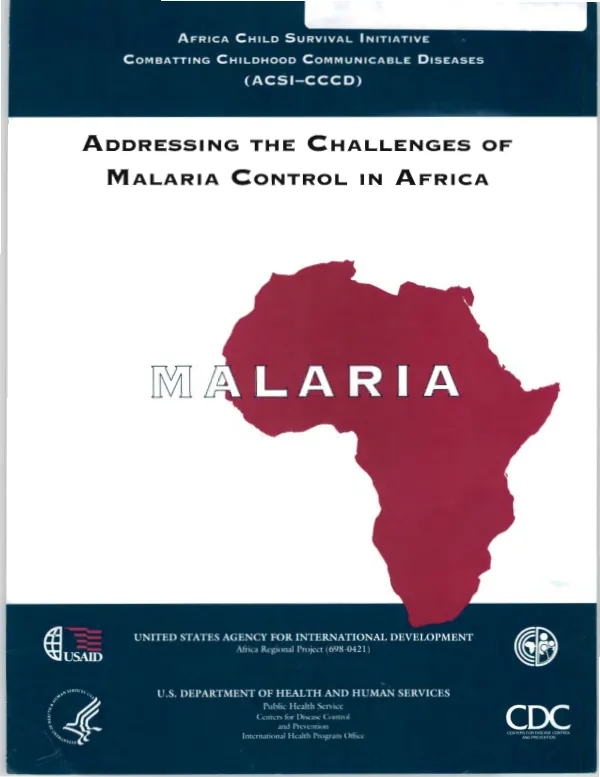
Addressing the challenges of malaria control in Africa
Malaria exacts an enormous toll on sub-Saharan Africa, killing more than 1.5 million children each year.
1970
Sign in to readA free account is required to download.
Abstract
This document makes technical and programmatic recommendations for a public malaria management and prevention program by drawing on the successes of the 12-year malaria component of the Africa Child Survival Initiative-Combatting Childhood Communicable Diseases (ACSI-CCCD), which was implemented from 1982-93. Section I discusses the impact of malarial disease on the human body, including the biology and epidemiology of the malaria parasite. In Section II the study discusses the management and prevention of the three classifications of malarial disease (acute febrile illness, chronic infection, and perinatal infection); discusses the control of malaria in pregnant women; makes a case for the use of insecticide-impregnated bed nets as the least costly method to reduce malaria transmission; and reviews the use of chemoprophylaxis (the regular administration of antimalarial drugs) to prevent malaria among children, travelers and immigrants, and pregnant women. Section III discusses the incorporation and/or merging of strategies for malaria prevention with existing, comprehensive health programs such as disease prevention and control programs, prenatal programs, and community-based initiatives; and discusses the requirements for a malaria control program, including written policies and program plans, a technical group and implementation staff, and systems for program monitoring, program evaluation, and operational research. An annex discusses progress in and constraints to the development of a malaria vaccine. Includes numerous references, tables, and figures.