USAID. MISSION TO ZAIRE
Africa child survival initiative/combatting childhood communicable diseases
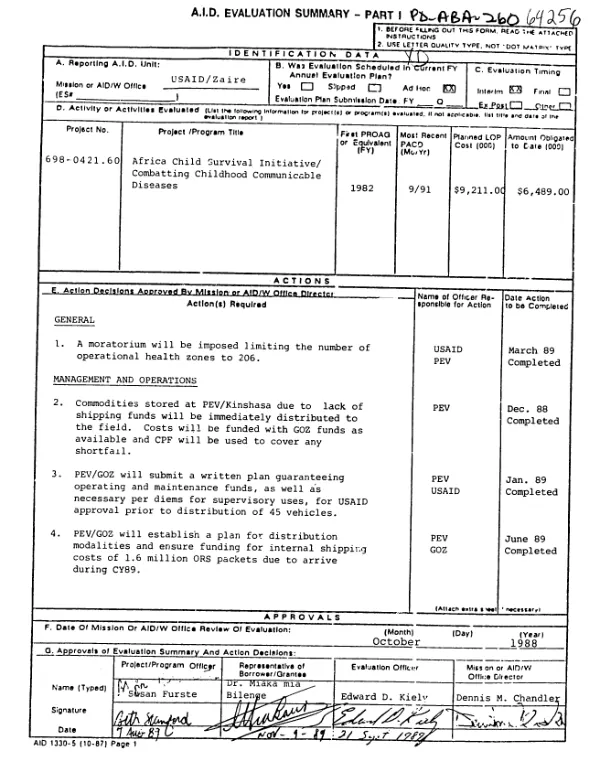
Summarizes mid-term evaluation (XD-ABA-260-A) of a project to reduce child mortality and morbidity in Zaire through vaccination, oral rehydration therapy (ORT), malaria treatment, and chemoprophylaxis for pregnant mothers.
1989
Sign in to readA free account is required to download.
Abstract
The evaluation covered the period 1982-11/88. The project has made significant achievements and has the potential, with some adjustments in the timetable, to meet or exceed most of its goals. In Kinshasa, immunizations have prevented 500,000-800,000 measles cases and averted 27,000-41,000 deaths. Outbreaks of polio have greatly diminished nationwide, including a 75% reduction in notified cases in Kinshasa. Reported cases of tetanus have dropped by half since the project start. In a Kinshasa hospital containing an internationally recognized ORT training center established by the project, deaths from diarrheal disease have decreased from 14% to 2%. The project has also made strides in upgrading its professional staff and zonal physicians in the treatment of childhood diseases, expanding its cold chain to meet the needs of some 200 health zones, and providing training to field staff. On the negative side, shortfalls in host country contributions have resulted in: non-payment or delays in payment of field personnel salaries; use of proceeds from ORT/chloroquine sales for advances that cannot be repaid; lack of operating funds for transportation and supervision; restraints on health education and training activities; irregular shipment of vital vaccine/ORT supplies to the field; and low morale at all levels of project organization. Largely as a result of these factors, vaccination tallies have stagnated since the last evaluation. More generally, inadequate host country support threatens long-term project sustainability. The Mission approved all but one of the evaluation team"s recommendations.
Related documents
![In-depth evaluation of the Reaching Every District [RED] approach in the African region](https://covers.devme.ai/gen/60179.webp)
![[Development Fund for Africa --] impact of child survival activities in Africa : a report on AID's progress in reducing infant and child mortality and illness in 17 child survival priority countries](https://covers.devme.ai/gen/8905.webp)