USAID. MISSION TO EL SALVADOR
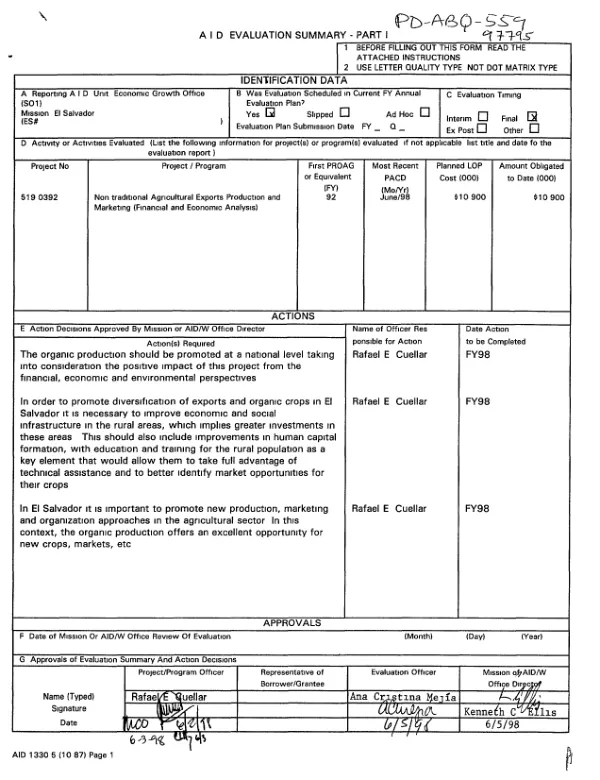
Agrarian reform financing
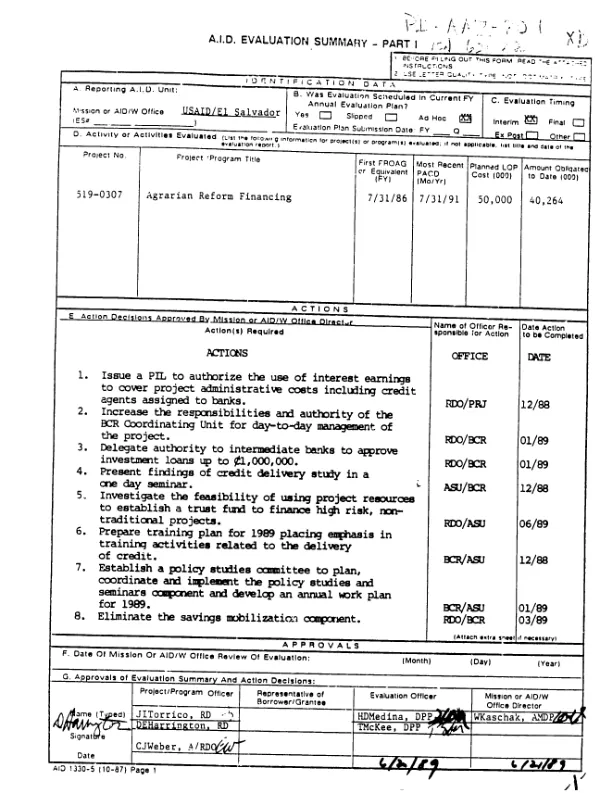
Summarizes mid-term evaluation (XD-AAZ-801-A) of a project to assist the Central Reserve Bank of El Salvador (BCR) in increasing the availability and productive use of agricultural credit for the agrarian reform sector.
1989
Sign in to readA free account is required to download.
Abstract
The project"s $60 million rediscount credit line has been successful in meeting the needs for traditional crop lending and for seasonal credit; monitoring and control aspects are sound. The impact of credit on the better-managed cooperatives has been substantial. However, the credit program has the following weaknesses: slowness and duplication of effort on the part of BCR in analyzing and approving investment loans; reluctance among banks to finance products with which beneficiaries are not familiar; and an insufficient level of lending to Phase III borrowers (although the group lending approach has been marginally effective with Phase III beneficiaries). Training activities have included: (1) 12 (27% of target) short-term in-country courses in credit, project analysis, and loan monitoring; (2) 4 short-term out-of-country courses for 13 (37% of target) persons; (3) selection of 15 participants for Master"s degree programs; and (4) provision of training equipment. The training component is flawed in that some of the out-of-country courses were not directly related to the project. Moreover, training objectives have not been clearly defined and and no training or TA is being provided to credit recipients. The component to conduct policy studies and seminars on financial markets lacks an overall plan; a credit delivery study has been discussed internally, but not disseminated as planned. The savings mobilization component, which was to be implemented through the Banco de Fomento Agropecuario (BFA) is being dropped because BFA and USAID/ES have been unable to agree on an implementation plan for this component.
Related documents
![Microenterprise innovation program : cooperative agreement no. 940-0406-A-00-5246 [with Catholic Relief Services] -- close-out report](https://covers.devme.ai/gen/5658.webp)