USAID DEC
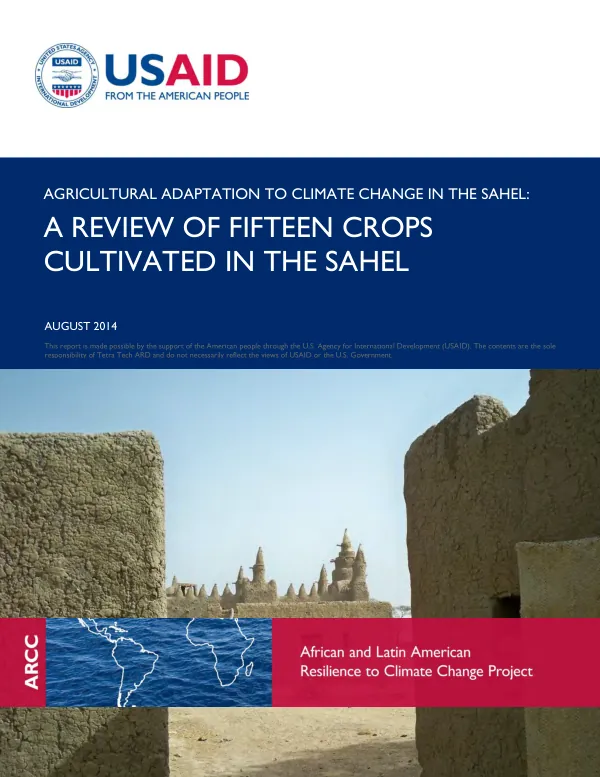
Agricultural Adaptation to Climate Change in the Sahel: A Review of Fifteen Crops Cultivated in the Sahel
Sign inMICHIGAN STATE UNIVERSITY FOUNDATION
Agricultural Adaptation to Climate Change in the Sahel: A Review of Fifteen Crops Cultivated in the Sahel
Agricultural adaptation to climate change in the Sahel is a critical issue, as the region is highly vulnerable to climate variability and change.
2014 · 111 pages
Sign in to readA free account is required to download.
Abstract
The Sahel region spans across several countries in West Africa, including Mali, Niger, Burkina Faso, and Chad. The region's agricultural sector is a significant contributor to the local economy and food security. Maize is one of the most widely cultivated crops in the Sahel, with a geographic distribution that spans across the region. The crop's life cycle typically begins in April and May, with planting occurring during the wet season. Maize production parameters, such as yield and biomass, are influenced by factors such as soil type, rainfall, and temperature. According to available data, maize yields in the Sahel region average around 1.5 tons per hectare. Pearl millet is another important crop in the Sahel, with a geographic distribution that is similar to maize. The crop's life cycle begins in May and June, with planting occurring during the wet season. Pearl millet production parameters, such as yield and biomass, are also influenced by factors such as soil type, rainfall, and temperature. Available data indicate that pearl millet yields in the Sahel region average around 1.2 tons per hectare. Rice is a less common crop in the Sahel, but it is still an important crop for food security in the region. The crop's life cycle begins in May and June, with planting occurring during the wet season. Rice production parameters, such as yield and biomass, are influenced by factors such as soil type, rainfall, and temperature. Available data indicate that rice yields in the Sahel region average around 2.5 tons per hectare. Sorghum is another important crop in the Sahel, with a geographic distribution that spans across the region. The crop's life cycle begins in April and May, with planting occurring during the wet season. Sorghum production parameters, such as yield and biomass, are influenced by factors such as soil type, rainfall, and temperature. Available data indicate that sorghum yields in the Sahel region average around 1.8 tons per hectare. Cotton is a significant crop in the Sahel, with a geographic distribution that spans across the region. The crop's life cycle begins in April and May, with planting occurring during the wet season. Cotton production parameters, such as yield and fiber quality, are influenced by factors such as soil type, rainfall, and temperature. Available data indicate that cotton yields in the Sahel region average around 500 kg per hectare. Cashew is a less common crop in the Sahel, but it is still an important crop for food security and income generation in the region. The crop's life cycle begins in May and June, with planting occurring during the wet season. Cashew production parameters, such as yield and nut quality, are influenced by factors such as soil type, rainfall, and temperature. Available data indicate that cashew yields in the Sahel region average around 1 ton per hectare. Mango is a significant crop in the Sahel, with a geographic distribution that spans across the region. The crop's life cycle begins in April and May, with planting occurring during the wet season. Mango production parameters, such as yield and fruit quality, are influenced by factors such as soil type, rainfall, and temperature. Available data indicate that mango yields in the Sahel region average around 10 tons per hectare. Shea nut is a less common crop in the Sahel, but it is still an important crop for food security and income generation in the region. The crop's life cycle begins in May and June, with planting occurring during the wet season. Shea nut production parameters, such as yield and nut quality, are influenced by factors such as soil type, rainfall, and temperature. Available data indicate that shea nut yields in the Sahel region average around 0.5 tons per hectare. Bourgou is a significant crop in the Sahel, with a geographic distribution that spans across the region. The crop's life cycle begins in April and May, with planting occurring during the wet season. Bourgou production parameters, such as yield and biomass, are influenced by factors such as soil type, rainfall, and temperature. Available data indicate that bourgou yields in the Sahel region average around 1.5 tons per hectare. Overall, the agricultural sector in the Sahel region is highly vulnerable to climate change, and adaptation strategies are necessary to ensure food security and sustainable livelihoods. The crops discussed in this review are critical to the region's agricultural sector, and understanding their production parameters and life cycles is essential for developing effective adaptation strategies.