USAID DEC
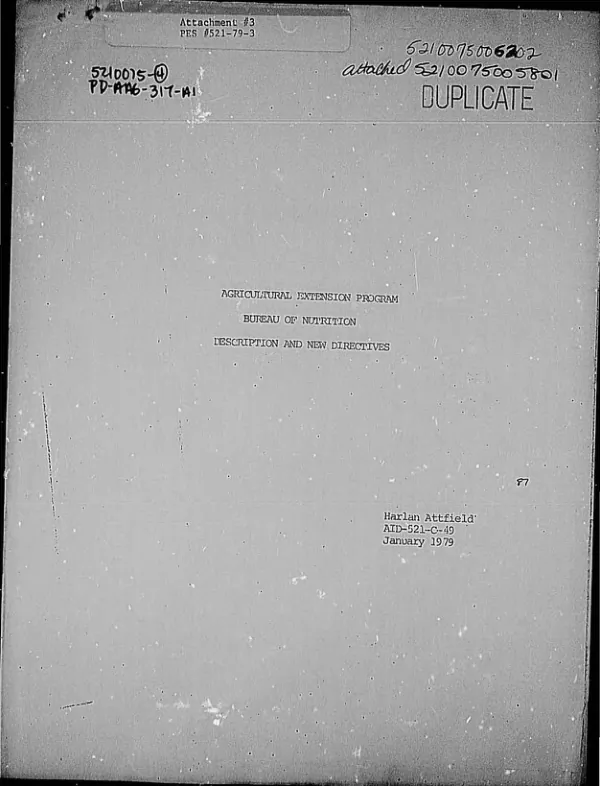
AGRICULTURAL EXTENSION PROGRAM, BUREAU OF NUTRITION, DESCRIPTION AND NEW DIRECTIONS
This report, attached to a PES (PD-AAF-559-A1), is a special study of agriculture and nutrition in Haiti.
ATTFIELD, HARLAN · 1979
Sign in to readA free account is required to download.
Abstract
The report begins with an examination of the major food crops grown in Haiti and how these foods are consumed. Typical peasant meals are described and evaluated for their nutritional quality. The average Haitian peasant's diet is found to be deficient in protein, fat, and calories, while vitamin intake is dependent upon the season. Practical measures for improving the diet are presented. In order to add green vegetables and fruit to the diet, home gardens should be encouraged. Calorie consumption can be increased through the production and consumption of root crops, such as sweet and Irish potatos. The quality of the protein consumed could be improved though the introducton of milk, meat, and eggs into the diet. Milk and beef, however, are neither affordable by the peasant nor economical for the agriculture sector. Therefore, the author strongly recommends the promotion of rabbit and chicken production to fill the country's protein needs. The agricultural extension activities of Haiti's Bureau of Nutrition (BON) are described. BON employs agricultural extensionists (AE's) to encourage improved food production, preservation, meal preparation, and infant feeding practices. One AE is assigned to each of the 30 nutrition centers; the AE's visit families with children in the feeding program, conduct weekly group meetings, and provide practical and theoretical agricultural assistance through the use of demonstration plots and other methods. Specific recommendations to further improve the extension program are made for each of following subject areas: staple foods, fruit/vegetable production, animal husbandry, soil conservation, grain storage, logistics, training, and supervision.