USAID. BUR. FOR PROGRAM AND POLICY COORDINATION. CENTER FOR DEVELOPMENT INFORMATION AND EVALUATION (CDIE)
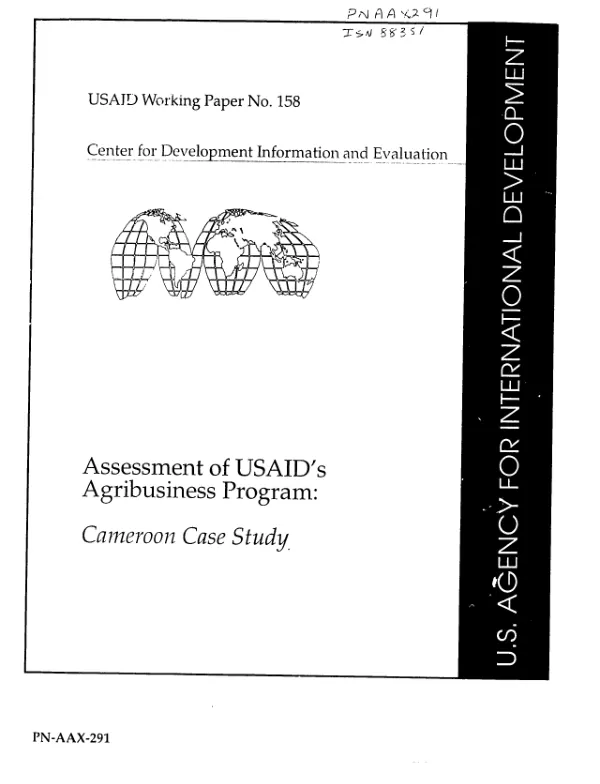
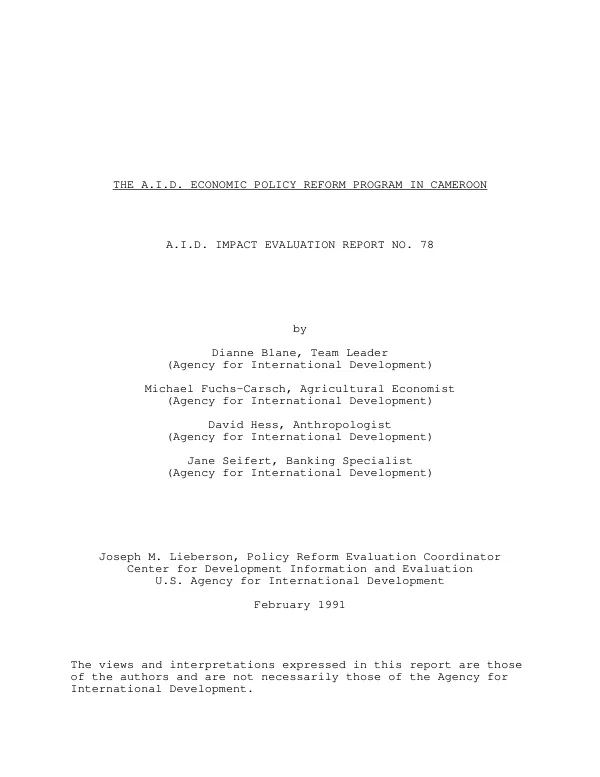
AID economic policy reform program in Cameroon
The Cameroon Fertilizer Subsector Reform Program aims to ensure small farmer access to fertilizers by replacing the public monopoly of fertilizer import and distribution with a free-market system.
Blane, Dianne|Fuchs-Carsch, Michael · 1991
Sign in to readA free account is required to download.
Abstract
This evaluation assesses the impacts of the project at its mid-point. Although some elements of state and donor involvement are still strong, the system has been liberalized and is on its way to privatization. In 1989/90, more than 64,000 tons of fertilizer were imported by 2 private firms and distributed by 5 cooperatives and 4 private traders. The impact of liberalization has been beneficial and positive. Leakages (i.e., waste, corruption, and inefficiencies), common under the public monopoly, have been stopped. Furthermore, the government has reduced its subsidy bill, realizing savings of about $14 million over the past 2 years. And, most importantly, farmers have been shielded from undue price increases, despite the subsidy reduction, because of efficiency gains in private fertilizer importation and distribution. The sustainability of these gains will depend largely on Cameroon's capacity to overcome its current economic crisis and the government's commitment to structural adjustment. Sustainability will be constrained by increasingly limited purchasing power in rural areas. If farmers have less to spend, the volume of fertilizer imports will decrease. A major lesson learned is that reform of the input side (e.g., fertilizer) of a productive sector will be constrained and probably difficult to complete in the absence of reform in marketing output (e.g., coffee, cotton).